Friday, April 15, 2011
Discoveries need dollars
Last week the Australian government announced they will be slicing 400 million dollars off NHMRC funding in the coming budget. Of course, it goes without saying that a loss of 400 million dollars to the Australian medical research community means lost jobs, defunded projects and ultimately the loss of lives and quality of life for Australians. In terms of CVD in the Australian community, in our cities we are well funded and stroke fatality is in decline; however, the vast land mass that is this enormous island has extreme health disparity. Remote populations in cities as large as Broome on Australia's west coast have access to one part-time GP; options like telemedicine are imperative in these communities but the funding behind these concepts must be continued. It is common knowledge among stroke practitioners that neuro-protectants are as yet ineffectual in humans, but animal model testing has shown possibilities of protection. Imagine a world where a potential stroke could be avoided all together; this is only possible with continued trial funding. Sex, depression, dementia and rehabilitation post stroke are burgeoning ares of study, these clinical and observational studies have enough difficulty in clinically dominant environments receiving funding for best practice trials. In Melbourne, the new amalgamated Florey Neuroscience Institute has two fabulous purpose built buildings, state of the art labs and collaborations with some of the best practitioners in the field of stroke. What was the point of the government funding these amazing spaces if there is a thinning stream of research outcomes, does it make it worth the communities money, because ultimately in every respect that's who pays for this enormous budget cut.

Wednesday, April 6, 2011
What's coming up in April on IJS Early view
Predictors of mobility after stroke: a systematic review | ||
Craig, Louise Wu, Olivia; Bernhardt, Julie; Langhorne, Peter Abstract Regaining post stroke mobility is considered a primary goal of the stroke patient in early rehabilitation. The ability to predict the recovery of post stroke mobility is of great clinical importance, providing information to healthcare professionals, patients and their families. We conducted a systematic review aimed at identifying the baseline factors, assessed within one week of stroke onset that are predictive of, or associated with, the recovery of mobility within 30 days post stroke. A comprehensive search strategy was applied to all major electronic databases to identify potentially relevant studies. Included in the review were two studies that evaluated the predictive value of baseline factors by developing a prognostic model, and three studies that assessed baseline factors that were associated with the outcome by univariate analysis. Walking was the most commonly assessed mobility outcome; age, the severity of paresis, reduced leg power, presence of hemianopia, size of brain lesion and type of stroke were shown to be predictive or associated with walking within 30 days post stroke. | ||
Wednesday, February 9, 2011
International Stroke Conference 2011
The International Stroke Conference is on again this time in Los Angeles; (it's always in the US). We have briefly summarized a few of the presentations so far - it's worth checking out the excellent ISC Science News site.
ER evaluation of TIA
Devin Brown
The ongoing unanswerable question is 'what is a TIA?' I love the link to this slide TIA is a mini stroke? from a talk by Devin Brown on ER evaluation of TIA. Dr Brown suggests in her slides that the AHA guidelines and an etiology hunt can find TIA, which will indicate a coming stroke. She warn that to miss TIA is to miss an opportunity window
Drip and Ship Thrombolytic Therapy
Jennifer Cohn, MSN, CNRN, Indiana University Health Presentation slides
This presentation is to open discussion of the development of partnerships with emergent stroke ready hospitals.
What a great idea - I wonder how this would work, or if it could work in the developing world?
SWALLOW-3D, a Simple 2-minute Bedside Screening Test, Detects Dysphagia in Acute Stroke Patients With High Sensitivity When Validated Against Video-Fluoroscopy
Jeff Edmiaston, Washington University in St. Louis Presentation slides
Certainly an interesting presentation; however, some factors seem to missing which makes the study less than comprehensive; though a great possible screening tool - IJS looks forward to gathering further information on this study.
ER evaluation of TIA
Devin Brown
The ongoing unanswerable question is 'what is a TIA?' I love the link to this slide TIA is a mini stroke? from a talk by Devin Brown on ER evaluation of TIA. Dr Brown suggests in her slides that the AHA guidelines and an etiology hunt can find TIA, which will indicate a coming stroke. She warn that to miss TIA is to miss an opportunity window
Drip and Ship Thrombolytic Therapy
Jennifer Cohn, MSN, CNRN, Indiana University Health Presentation slides
This presentation is to open discussion of the development of partnerships with emergent stroke ready hospitals.
What a great idea - I wonder how this would work, or if it could work in the developing world?
SWALLOW-3D, a Simple 2-minute Bedside Screening Test, Detects Dysphagia in Acute Stroke Patients With High Sensitivity When Validated Against Video-Fluoroscopy
Jeff Edmiaston, Washington University in St. Louis Presentation slides
Certainly an interesting presentation; however, some factors seem to missing which makes the study less than comprehensive; though a great possible screening tool - IJS looks forward to gathering further information on this study.
Wednesday, February 2, 2011
South African Stroke Guidelines article in IJS inbox
 The South African Guideline for the Management of Ischaemic Stroke and TIA: Recommendations for a resource constrained health care setting JUST ARRIVED IN IJS inbox; very excited - an excellent piece from Alan Bryer and co. (Bryer A, Connor MD, Haug P, Cheyip B, Staub H, Tipping B, Duim B, Pinkney-Atkinson V).
OBJECTIVE
Stroke is a leading cause of death and disability in South Africa. As in other developing countries, an increase in the burden of stroke is predicted as the population is undergoing a rapid epidemiological transition with increased exposure to, and development of, stroke risk factors, together with aging of the population.
Most published stroke guidelines emanate from developed countries that have more comprehensive stroke services and resources available for their citizens. Such guidelines are therefore not always applicable to countries with limited resources.
 The objective of the South African Stroke Guideline was to develop realistic and appropriate recommendations within the current South African context of a resource constrained health care system.
Thursday, January 27, 2011
Stroke resources in Indonesia - coming to Early view
Stroke resources in Indonesia are limited; however, there has been demand to include nonbiomedical practitioners in stroke care. This paper will present a snapshot of available non-biomedical stroke ‘services’ used by stroke survivors in two subdistricts of Aceh, Indonesia. Data were collected through interviews, observations, focus groups and vignettes with stroke survivors and their carers. All practitioners discussed and demonstrated an understanding and approach to stroke treatment with multiple layers of influence, predominantly, education, religion and culture. There were a number of areas of overlap between the two categories; some of these influences were also evident in the biomedical practitioners.
Tuesday, January 18, 2011
Emotional stress can change brain function

Thursday, January 6, 2011
Early view - How to cite an Early View article.
We decided earlier this year to embark on 'Early View' as a way to expedite the publication of our ever increasing manuscript pile. We realize that authors want their manuscripts published as soon as possible; for grants and funding; to increase personal citations, and to share important information with the stroke community. Early View is now online. This means that once the reviewer and revision process is complete and your manuscript has been accepted, we'll copyedit, and make a proof. Once you approve the article will be placed online and can be cited.
Early View articles may not yet be allocated to a print edition, meaning that they do not yet have volume, issue or page numbers, therefore Early View articles cannot be cited in the traditional way. They are given a Digital Object Identifier (DOI), which allows the article to be cited and tracked before it is allocated to an issue. When you cite an article that is not yet published in print but is published on Early View, you may do so by citing the DOI. After print publication, the DOI remains valid and can continue to be used to cite and access the article.
Early View articles may not yet be allocated to a print edition, meaning that they do not yet have volume, issue or page numbers, therefore Early View articles cannot be cited in the traditional way. They are given a Digital Object Identifier (DOI), which allows the article to be cited and tracked before it is allocated to an issue. When you cite an article that is not yet published in print but is published on Early View, you may do so by citing the DOI. After print publication, the DOI remains valid and can continue to be used to cite and access the article.
Thursday, December 16, 2010
Sneak peek - what's coming to print in IJS this year!
| “Better wear out sheets than shoes” A Survey of 202 Stroke Professionals´ Early Mobilisation Practices and Concerns |
Monica Skarin1, Julie Bernhardt2, Anna Sjo¨ holm1, Michael Nilsson1, and Thomas Linden1
Background Stroke unit care improves the outcome for patients.
One component responsible for this may be that
patients are mobilised earlier and more intensively. An ongoing
randomised controlled trial is investigating the potential
benefits of early mobilisation, but currently there is
limited evidence for the practice. Therefore, current practices
may be driven by historical precedent and/or clinical opinion,
and varying approaches to mobilisation are likely. This study
aims to examine different health professionals’ concerns
regarding early mobilisation in acute stroke. In this study,
early mobilisation was defined as frequent out of bed activities
within the first 24 h after stroke onset.
Methods A nine-item anonymous questionnaire exploring
benefits and harms with early mobilisation after stroke was
used during interviews of stroke care professionals attending
the annual Australasian stroke conference in 2008.
Results The survey was completed by 202 professionals,
representing 38% of all conference attendees. 65% were
females, 50% under 40-years old, 46% worked in acute stroke
and 31% in rehabilitation. Thirty-five percent were nurses,
26% medical doctors, 19% physiotherapists and 12% occupational
therapists. Two-thirds had o10-years experience with
stroke. Sixty percent of the surveyed professionals had concerns
about early mobilisation and there were significantly
more professionals concerned about early mobilisation for
haemorrhagic (59%) than ischaemic (23%) stroke patients.
Conclusion Our study shows that most clinicians had concerns
in relation to early mobilisation of stroke patients and
more clinicians had concerns for haemorrhagic than for
ischaemic stroke. The evidence underlying these concerns is
shallow.
Sunday, October 17, 2010
WSC Seoul Korea
http://www.world-stroke.org/education_webcasts.asp
The World Stroke Organization host the World Stroke Congress every two years; this year in Seoul, Korea. The meeting attendance is projected at over 3000 attendees - many of those from Korea. The program has been quite varied, as you would expect from a global conference. I understand that the WSO has a no rejection policy which is a wonderful way to be inclusive. There was some mention among some groups that this may lower the quality of the meeting, this remains to be seen but there is such a great presence and support from so many excellent strokologists at the actual meeting the quality of the meeting will be maintained and developed in others way - the ESC turned 20 this year so still early days yet! The International Journal of Stroke held their Editorial Board meeting on Friday the 15th with excellent attendance and celebratory champagne. The outcome of the meeting was to continue to develop our successful ideas and innovations which have made us quite a hit with our readership and our publisher!

 Padma Gunaratne receiving the World Stroke Day Award for Sri Lanka from Bo Norrving President of the Wold Stroke Organization.
The World Stroke Organization host the World Stroke Congress every two years; this year in Seoul, Korea. The meeting attendance is projected at over 3000 attendees - many of those from Korea. The program has been quite varied, as you would expect from a global conference. I understand that the WSO has a no rejection policy which is a wonderful way to be inclusive. There was some mention among some groups that this may lower the quality of the meeting, this remains to be seen but there is such a great presence and support from so many excellent strokologists at the actual meeting the quality of the meeting will be maintained and developed in others way - the ESC turned 20 this year so still early days yet! The International Journal of Stroke held their Editorial Board meeting on Friday the 15th with excellent attendance and celebratory champagne. The outcome of the meeting was to continue to develop our successful ideas and innovations which have made us quite a hit with our readership and our publisher!


Saturday, August 28, 2010
What is a TIA?
International Journal of Stroke is at the NSRI scientific retreat in the Hunter Valley; the session is being chaired by the amazing and highly regarded clinician Marie-Germaine Bousser. So, the question posed for this discussion, headed by Simon Koblar, Helen Dewey and Dominique Cadilhac is 'What is TIA?' And the consensus is that no one can agree - how this condition is defined and how to run cohorts which supply data that is novel, relevant in Australia and of interest to public health...
Tuesday, August 17, 2010
Sixth International Stroke Summit


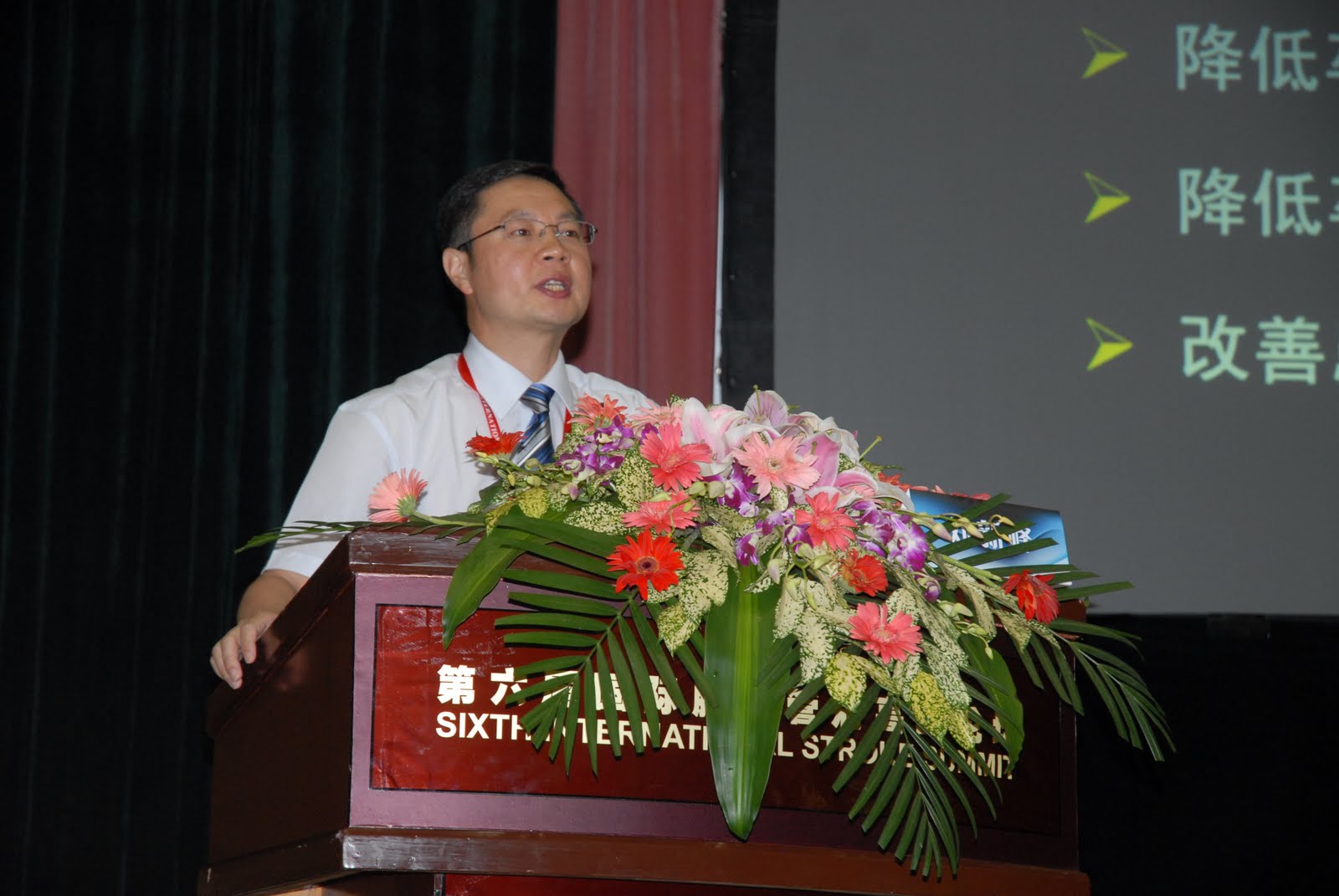
Sixth International Stroke Summit
Juehua Zhu, Gelin Xu, Xinfeng Liu
Department of Neurology, Jinling Hospital, Nanjing University School of Medicine, Nanjing, China
Correspondence Xinfeng Liu, Department of Neurology, Jinling Hospital, Nanjing University School of Medicine, 305 Zhongshan East Road, Nanjing 21002, Jiangsu, China
To establish a platform for international communication in stroke management, Jinling hospital launched an annual conference, the International Stroke Summit in 2004. The summit has been successfully run for six times and has been endorsed by World Stroke Organization since 2007. More than 1000 doctors and researchers have participated in each meeting.
The Sixth International Stroke Summit was held on July 9-11, 2010 in Nanjing, China. The conference motif of bridging the gap between developing and developed countries in stroke management was high appropriate. Hot debate and grand attention had been focused on topics such as the development of endovascular treatment of extracranial and intracranial atherosclerotic diseases, clinical trials of stroke treatment, stroke registry and genetic factors for stroke.
On the first day of this conference, the National Neuroendovascular Association was set up. The association constitutes neurologists, vascular surgeons and intervention clinicians from major medical centers in China. The mission of such a unique association is to shed more light on the standardization of endovascular treatment in China.
Distinguished from the previous meetings, two sections specialized on endovascular therapy and an international discussion was established. In the intervention section, clinicians talked about their own experiences with cerebral angiography and stenting. In the international section, stroke specialists from America, Australia, Finland, Netherlands, Japan, India, Brazil and China shared the latest developments in stroke research.
Prof. Xinfeng Liu, the chairperson of this summit, introduced the frontier of neuroendovascular treatment. He mentioned that IV-tPA can be beneficial for acute ischemic stroke up to 4.5h from stroke onset. However, due to low recanalization rate and high re-closure rate after thrombolysis, especially in patients with severe stroke and patients with T-shaped artery occlusion, few patients who meet the criteria for IV tPA thrombolysis can benefit from it. For these patients, intra-arterial thrombolysis, mechanical thrombectomy may be the better treatment choice. Dr. Liu also introduced the recently published CREST study1. Younger patients would benefit more from carotid stenting, older patients from endarterectomy. The CREST study proved carotid artery stenting together with endarectomy to be powerful weapons against stroke.
Dr. Yongjun Wang from Tiantan Hospital lectured on the improvement of stroke management worldwide. He introduced the GWTG-stroke program carried out in USA which raised the percentage of patients receiving standard treatment under stroke guidelines; from 41% in 2003 to 83% in 20092. This study underlined the importance of guidelines in stroke treatment. In the Canadian Stroke Strategy and British National Stroke Strategy, the importance of patient education, primary prevention, pre-hospital management, acute stroke units and subacute rehabilitation units as well as secondary prevention were highlighted. Dr. Wang said stroke management in China lagged far behind than that in these western countries. The ongoing Golden Bridge Project of Stroke Care is a first attempt in China at a national public health campaign; hopefully this project will be active throughout China in the next five years.
Dr. Yukito Shinohara, a principal investigator of the Cilostazol Stroke Prevention Study (CSPS), introduced a clinical trial for stroke prevention (CSPSII). CSPSII is a randomized, multicenter, double-blind, parallel-group study, included 2757 non-cardioembolic stroke patients from 278 centers between December 2003 and December 2008. Patients randomized to cilostazol group (1337 patients), received 100 mg twice daily and aspirin group (1335 patients), received 81 mg once daily. The duration of treatment lasted a minimum of one year and a maximum of five years. Eighty-two strokes occurred in cilostazol-treated patients, and two of these events were fatal. In the aspirin group, there were 119 strokes, including three deaths. Hemorrhagic stroke or hemorrhage requiring hospitalization occurred in 23 patients in the cilostazol group and 57 in the aspirin group. Dr. Shinohara pointed out that cilostazol would be an alternative to aspirin and clopidogrel in our arsenal against secondary stroke.
About 1200 domestic and overseas delegates participated in this meeting. Many others watched the summit via live Internet broadcast. Thirty selected abstracts submitted to the conference were published in Cerebrovascular Diseases3. The organizers announced that the next meeting, the Seventh International Stroke Summit, will be held on July, 2010 in Nanjing, China. They encouraged the clinicians and researches to join this Nanjing summer gathering and continue their contribution to boost east west academic communication. Detailed information concerning the conference is available on the website: www.stroke.net.cn
References
Subscribe to:
Comments (Atom)
Featured Post
Epidemiologic profiling for stroke in Nepal: Endeavour towards establishing database
Resha Shrestha @avi_neuro. , MS 1 , Avinash Chandra, MD 1 , Samir Acharya, MS 1 , Pranaya Shrestha, MS 1 , Pravesh Rajbhandari, MS 1 , Re...

-
 In 2017, Hilary Wehby, a stroke survivor from Jamaica, approached the World Stroke Organization about her desire to establish...
 -
 Luciano Sposato London Health Sciences Centre, London Schulich School of Medicine & Dentistry, Western University, Clinical Neurol...