Showing posts with label leadership. Show all posts

Monday, August 26, 2019

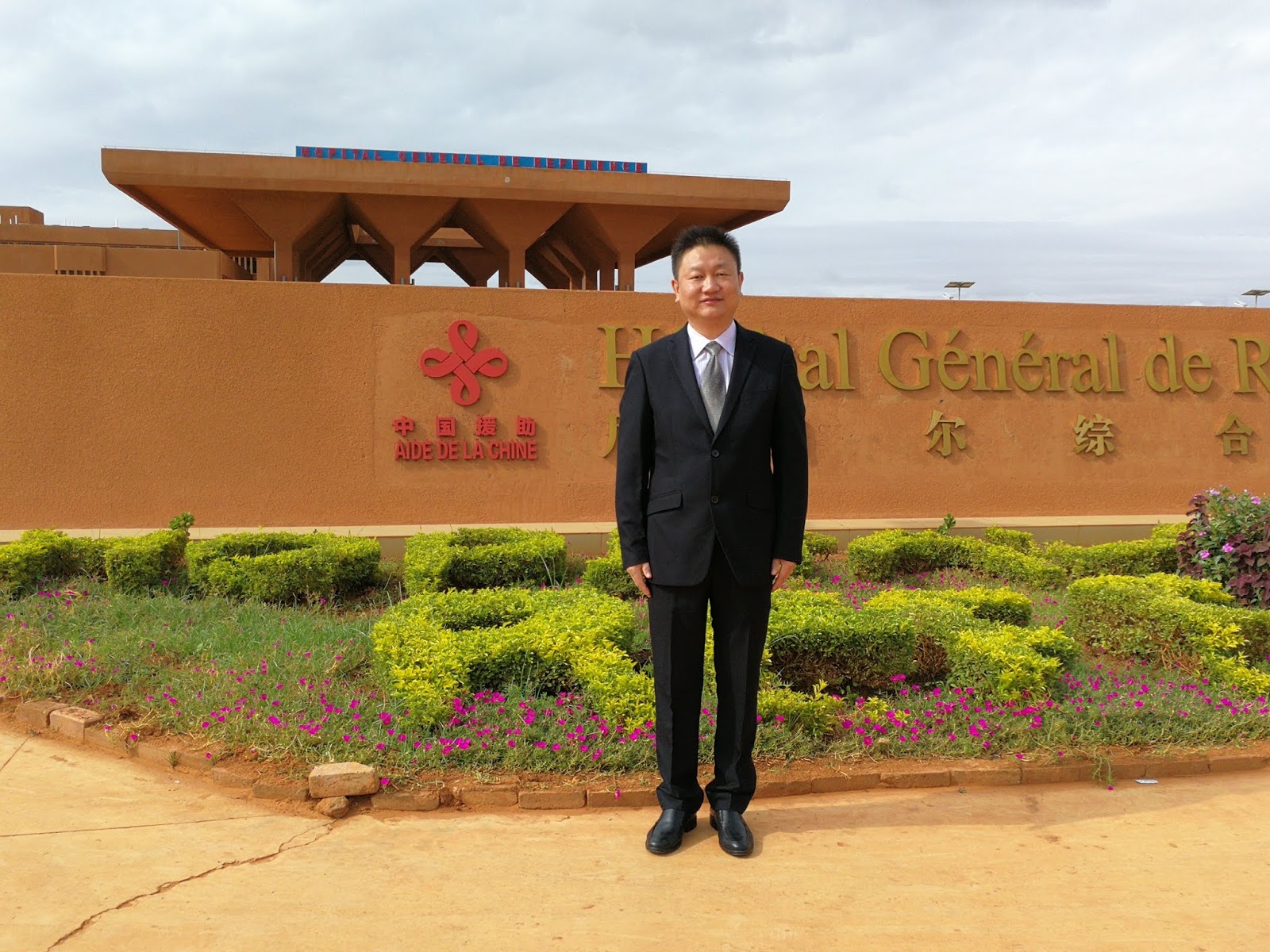
Seven minutes in stroke - Dr Li Xiaofeng


In the coming weeks we will online publish the article Granulocyte Colony-Stimulating Factor and Stromal Cell-Derived Factor-1 Combination Therapy: A More Effective Treatment for Cerebral Ischemic Stroke the subitting author Dr Li Xiaofeng has answered our Seven Minutes in Stroke. 
1. What inspired you towards neuroscience? 
Neuroscience is the final frontier of the human body, and many mysteries remain to be revealed. Most importantly, there are many intractable neurological diseases, such as AD, PD and stroke, that still need to be further investigated to elucidate the mechanims and develop new therapeutic strategies. 

2. Why stroke? Among those intractable neurological diseases, stroke is currently the first cause of death in Chinese residents. Currently, one person has a new stroke every 12 seconds, and one person dies of a stroke every 21 seconds. My grandfather died of ICH, so I chose neurology as my profession after graduating from college, and I hope I can devote myself  and make my contributions in stroke research and clinical treatment.

3. What have been the highs so far? Our research team will be very excited when our animal experiments have made significant progress. The conclusion of our study are useful for guiding clinicians in clinical practice. Although the results cannot be used directly in the clinic, the can allow clinicians to keep thinking and be prudent in their treatment, which is a good thing for patients.

4. What have been the lows? The data obtained from our current study in animas cannot be immediately applied in clinical practice. The safety and side effects of drug combinations in our study are unknown, and further preclinical studies and clinical trials are needed for translation.

5. How do you balance work life with the needs of home life? I have always regarded the work of neurology as an interest rather than just a career, doing a good job at work time, taking care of my family during the rest time, and taking neuroscience research as an interest if there is extra rest time.

6. Who are your most important mentors and how did you find them?
Professor Mei YuanWu, Department of Neurology, Union Hospital of Huazhong University of Science and Technology, was my doctoral tutor. As of this year, Professor Mei has been working in neurology for 50 years. I met him at a domestic stroke meeting. I studied at Union Hospital for three years.
7. What are your most important collaborations and how have you built them? In 2005, our neurology department established a cooperative relationship with the Department of Neurology of Tiantan Hospital. Professor Wang Yongjun of Tiantan Hospital has been a visiting professor of our hospital. I met Professor Wang in 2002 and studied in Tiantan Hospital for half a year. Professor Wang is the first scholar to promote the Stroke Unit in China. I respect Professor Wang and his achievements in the field of stroke prevention in China.

Li Xiaofeng
Chief physician
Department of Neurology,The People's Hospital of Guangxi Zhuang Autonomous Region,  China.        


Wednesday, November 8, 2017

Hellenic Alliance for Stroke, Stroke Awareness Day November 4th, 2017


A Hellenic Alliance for Stroke, Stroke Support Organisation (HAS SSO) Event was held in honor of Stroke Awareness Day, with a visit from Jon Barrick and Sandra Jackson on November 4th in Thessaloniki Greece. In the morning sessions at Mediterranean Palace hotel, the Hellenic Neurology Association held its annual conference.

Friday, July 21, 2017

The World Stroke Organization strongly endorses the efforts of the World Health Organisation to reduce tobacco-related illness and death


Stephen Davis and Valery Feigin, on behalf of the World Stroke Organization 

Stroke is a leading cause of death and disability, particularly in low and middle-income regions. Smoking is a major modifiable risk factor for stroke, with similar risk in women and men. Smoking (both active and passive) has been known as one of the most important risk factors for stroke for many years. In the most recent Global Burden of Disease 2015 Study, smoking was ranked the 5th most important risk factor for stroke accounting globally for almost 26 million disability-adjusted life years (DALYs) (23%) due to stroke, with the bulk of the burden (almost 22 million DALYs or 85% of stroke-related DALYs due to smoking) born in low- to middle-income countries. Smoking accelerates atherosclerosis in the cerebral arteries, an important cause of stroke.

Wednesday, April 19, 2017

Monday, March 20, 2017

Seven minutes in stroke - Caterina Breitenstein


1. What inspired you towards neuroscience?
Trained as a clinical psychologist, I have always been fascinated with human behavior, particularly with social interactions. With the emergence of cognitive neuroscience, I wanted to explore the neural basis of successful and unsuccessful verbal and nonverbal interactions.

2. Why stroke?
To me, post-stroke aphasia is one of the most devastating human conditions. Patients frequently appear physically unharmed, but are mentally „locked in“ because of their inability to successfully interact with other humans.

3. What have been the highs so far?
I recently had the privileg to be the local principal investigator of the to-date largest randomised controlled clinical trial (RCT) on the effectiveness of intensive speech and language therapy/SLT in chronic post-stroke aphasisa. The results demonstrated statistical superiority of intensive SLT compared to no or low intensity SLT and have been accepted for publication by the prestigous medical journal The Lancet [http://dx.doi.org/10.1016/S0140-6736(17)30067-3]. I am confident that the results will contribute to improved treatment options for stroke patients with aphasia in the intermediate future.

4. What have been the lows?
Having worked at a neurology department for the past 17 years, I experienced how limited the research devoted to post-stroke aphasia has been in the medical field. Significantly more contributions in terms of publications and grants have been made in the field of physical post-stroke symptoms. The sad consequence has been that access to SLT has become increasingly difficult for stroke patients with aphasia.

5. How do you balance work life with the needs of home life?
This is clearly not one of my strenghts. It feels like an ongoing struggle between following my passion for work and spending time with my two lovely children and my husband. So it is actually a constant ‚imbalance‘, one way or the other…

6. Who are your most important mentors and how did you find them?
As a postdoc, I worked for two years with Diana Van Lancker Sidtis at the University of Southern California in Los Angeles (USA). Diana inspired me to unorthodox ways of thinking in solving ‚the brain puzzle‘ – and taught me that food is of minor importance when you are analysing data from one of your recently completed studies! Stefan Knecht and E. Bernd Ringelstein (formerly Dept. of Neurology, University of Muenster, Germany) shared my passion for language from their neurologists‘ perspectives and were always highly supportive of my scientific projects.

7. What are your most important collaborations and how have you built them?

The FCET2EC study group designed and realized the above mentioned RCT on SLT effectiveness in chronic aphasia. Without the joint expertise of the group members, the study would have never accomplished. The Collaboration of Aphasia Trialists (CAT) initiative lead by Marian Brady (University of Glasgow, UK) got me involved with aphasisa experts worldwide. In this collaboration, we are currently aiming to develop international core outcome sets (COS) for aphasia research as well as to establish an international registry for routine care aphasia outcome data. I consider both projects to be of outmost importance in the field of aphasia.

Caterina is from the Dept. of General Neurology with Institute for Translational Neurology
University of Muenster, Germany she can be contacted at breitens@uni-muenster.de

Tuesday, February 28, 2017

World Stroke Award Winners Announced

Global Experts Highlight Best Practice in Stroke Awareness Campaigns


The World Stroke Organization has announced the winners of their annual awards for best practice in raising awareness of key issues in stroke. The WSO, a worldwide membership body with over 4000 members representing over 100,000 stroke professionals, supporters and survivors. It works to reduce the global burden of stroke and central part of its program is the delivery of an annual World Stroke Day Campaign, World Stroke Day brings together WSO members and stroke stakeholders in a coordinated global day of action to raise awareness of critical issues in stroke.

Last year the theme for World Stroke Day was ‘Stroke is Treatable’ around 100 campaigns were registered with on the WSO map of action, almost half of which applied for an award. Submissions were reviewed by WSO Board and Campaign Committee members with winners selected for reducing the impact of stroke  by raising awareness of patient treatment needs and the potential for recovery.

Award for Best Campaign in a High Income Country
Neeman Stroke Survivors, Israel were selected in the High Income Country category for their high profile campaign using TV, advertising viral online campaigning and advocacy events to raise awareness of the signs and urgent treatment needs of people having a stroke. 


The Cheras Rehabilitation Hospital in Kuala Lumpur Malaysia received an award for best campaign in a low to middle income country.  The hospital ran a broad ranging program of workshops and events involving patients, carers, healthcare professionals and local policy makers to raise awareness of the impact and long term treatment and support needs of patients and families.


The World Stroke Campaign Award for outstanding individual achievement was given to MacDonald Oguike for his leadership of the Acha Foundation’s MasterStroke program that used an impressive combination of media, social media and mobile technology to raise awareness and understanding of stroke throughout Nigeria.


“Stroke is the second biggest cause of death and the single biggest cause of disability worldwide. It is crucial that people recognize the signs of stroke and understand that effective treatment can saves lives and reduce the devastating impact on individuals, families and society. Each of the winning campaigns has made a significant contribution towards the WSO’s vision of a life free from stroke.” said World Stroke President Werner Hacke.

“Each World Stroke Campaign Award Winner has worked in coordinated way, not only to make lives better in their own communities but to support global awareness of stroke. This kind of work is crucial to ensuring that stroke gets the attention and resources it deserves and each winner provides examples that we can all learn something from.” said WSO Campaign Chair Jon Barrick.


For more information about the World Stroke Campaign and Awards please visit www.worldstrokecampaign.org or email campaigns@worldstroke.org

Thursday, February 16, 2017

TWAS-Elsevier Foundation: Seeking Applications for Sustainability Visiting Expert Programme in Developing Countries Deadline

TWAS-Elsevier Foundation: Seeking Applications for Sustainability Visiting Expert Programme in Developing Countries
Deadline: 1 March 2017
The World Academy of Sciences (TWAS) in partnership with the Elsevier Foundation, is seeking applications for its “Sustainability Visiting Expert Programme” with an aim to provide institutions and research groups in developing countries, especially those with limited outside contacts, with the opportunity to establish long-term links with world leaders in sustainability and further build capacity building in their countries.


http://twas.org/opportunity/elsevier-foundation-twas-sustainability-visiting-expert-programme

Featured Post

Epidemiologic profiling for stroke in Nepal: Endeavour towards establishing database

Resha Shrestha  @avi_neuro. , MS 1 , Avinash Chandra, MD 1 , Samir Acharya, MS 1 , Pranaya Shrestha, MS 1 , Pravesh Rajbhandari, MS 1 , Re...