Thursday, September 26, 2019

Young stroke survivor Nicky Bruno reminds us of the importance of self advocacy

Two years ago Nicky Bruno had a stroke, as a young adult working and coaching in collegiate athletics in the USA, this was absolutely devastating. Here Nicky shares her story and encourages us all to take the initiative in preventing a stroke.


Where were you when you had your stroke? - I had my stroke at my home at the age of 30.

Could you access hospital? - I was in the vicinity of two hospitals (within 30 minutes) of my home. One was a Primary Stroke Center and one was a Comprehensive Stroke Center.  

What expectations did you have for your treatment, rehabilitation and recovery? -  I was diagnosed with a spontaneous vertebral artery dissection, which is a tear that formed in the artery of my neck, that produced a clot which disrupted the flow of blood to my brain. This led to my cerebellar stroke. Following my diagnosis, I expected that there would be more information known about my specific condition and that there would be a set plan for recovery already in place. 

What was your experience of treatment and rehabilitation? - Since my condition is rare, I had to research and visit a young stroke specialist to help me devise a rehabilitation plan. The stroke affected my cerebellum and left me unable to walk, balance, or read. Entering a rehabilitation and nursing facility and then finding an outpatient physical therapy clinic that could help create innovative vestibular exercises was crucial to my recovery.  

What has helped you in your recovery? - Directly following my stroke, I dedicated myself to learning as much as I possibly could about my condition and focused relentlessly on my rehabilitation. Having been an athlete all of my life and a collegiate coach at the time of my stroke, I transferred my focus to retraining my brain. Currently, I have slowly regained my balance and the ability to not only walk on my own but jog again. With time, dedication and practice, I was also able to manage my visual symptoms enough to be able to type, read, and drive. Each day I continue to work to find ways to modify my daily life to fit my new normal.  

What have been/are your fears?I would have to say my biggest fear was/is sustaining another stroke since mine was spontaneous. 

How did your family and friends feel and respond? -  Following my stroke, I was unable to work or care for myself. Without the help and support of my family and their tireless pursuit to get me the best possible care, I would not be where I am today! 

Do you have a message for our World Stroke Campaign this year?
I firmly believe that it is equally important to be your own advocate when it comes to your health if you are able. This begins with taking the initiative to employ prevention strategies, knowing your individual risk factors, and identifying the various signs and symptoms of a stroke! 

While stroke is typically thought of as something that affects only older individuals, this experience has opened my eyes to the fact that young stroke is more common than we think. I am passionate about advocating for young stroke, and I wanted to reach out in the hope that I can help others! 

Wednesday, September 25, 2019

Exploring solutions for multimorbidities prevention and control


The Global Coalition for Circulatory Health gathered for a side event around the UN General Assembly this week. WSO Global Policy Chair Prof Bo Norrving contributed to the event - 'Exploring solutions for multi-morbidities prevention and control: the case for circulatory health". Other participants in the panel included David Wood (past WHF President) and Vivekanand Jha (President of the International Society of Nephrology). 

Multi-morbidity, the concept under discussion is core to stroke, heart disease, kidney disease, and vascular diseases, which together form a strong cluster along with hypertension driving premature morbidity and disability globally. Multi morbidity, where patients experience several conditions needs to be recognized as a major prognostic factor on its own right and clinicians and health systems need to be able to respond to multiple needs of patients to reduce mortality, disability and improve quality of life.

While multi-morbidities are expected to increase largely as a result of demographic change, circulatory diseases share many risk factors and show incredible potential for prevention. This potential provides a strong "glue" that binds partner members of the Global Coalition for Circulatory Health in their work towards global health goals. 

Prof Norrving presented recent epidemiological data from Sweden, which demonstrates that incidence of first and recurrent strokes can be substantially decreased with effective intervention on risk factors, providing proof of principle that prevention works. The priority now is to ensure that inequalities in access to preventive and acute care are reduced, so that those countries currently experiencing the greatest increase in stroke and circulatory disease - typically LMICs - can get ahead of the curve on prevention.

Multimorbidity and strengthening of the workforces will be themes for future discussions within the Global Coalition for Circulatory Health, which will have a next next summit in June 2020.

For more on the shared agenda between stroke and circulatory disease download Sustainable Action for Circulatory Health White Paper

Friday, September 13, 2019

Improving stroke prevention and support in Tanzania through primary health care


Joel Samson Ruvugo is a primary health care consultant in Dar es Salaam
Tanzania, here he talks about his commitment to increasing stroke prevention and support through his public health skills and knowledge.


What has inspired you to be involved in stroke support?
For me getting involved in stroke support is both an informed and worthwhile decision. Stroke support, and organisations that provide it, are needed urgently in Tanzania. I feel a responsibility to invest the knowledge and skills that I have gained in my public health work in communities through a cascading approach.

What does stroke support look like in your country?
There are a good number of health facilities in Tanzania that offer cardiovascular disease (CVD) treatment services, including clinical assessment, MRI, CT-SCAN, ECHO, ECG, X-ray, and weight, body and waist mass indexes. However, CVD prevention and post stroke care services for stroke survivors need to be improved in order to ensure long term impact for stroke survivors, family members and the general community.

How did the project come about?
 As a tutor with the People’s Open Access Education Initiative, which partners with EUCLID, I facilitate a topic on NCDs, in particular CVD and diabetes mellitus. In collaboration with different research institutions we provide public health capacity building to health care professionals in low and middle income countries, where the burden of NCDs is growing. I am in close contact with people affected by stroke and we have discussed many issues in regard to the impact of stroke, and family and community needs. I have used this learning and insight to develop my stroke support activities.

What have been some of the outcomes of the project?
There is increasing awareness of stroke and sensitisation of health services to the needs of stroke patients and their carers. They are increasingly accessing available health facilities for stroke assessment and rehabilitation. There are now health and heart clubs in different parts of the country as a result of the project’s stroke management cascading model.

What has been the feedback from stroke survivors to the project?
The feedback from stroke survivors is that there has to be public health promotion, which promotes healthier lifestyle behaviours and support for the development of approaches that enable behaviour change. I see the need for regular provision of stroke education and health promotion, information systems that best support the stroke strategy, ICT materials and the promotion of widespread and consistent use of patient care guidelines in all settings in the country.

What has been the response from others – community, doctors, politicians?
The community, doctors and politicians recognise the need to have stroke support organisations that are accessible and reliable, with focal centres and human and financial resources to be able to execute integrated stroke interventions in any given local setting in Tanzania.
  
What would you say to other people to make them take stroke prevention seriously?
Primary health care is key to stroke prevention. There is a need to establish a framework for educating health care professionals to address the social determinants of health in Tanzania. CVDs are silent killers, therefore, individuals, family members and communities must be aware of the impact of CVDs to their health, and risk factors that they can manage.


Thursday, September 12, 2019

An inspiring personal testimony about aphasia post stroke


François Grosjean, Professor Emeritus at the University of Neuchâtel, Switzerland, shares a recent interview he undertook with a multilingual aphasic stroke survivor


My interest in aphasia - language and speech impairment due to brain damage most often resulting from a stroke - started many years ago when I was writing my first book on bilingualism, Life with two languages: An introduction to bilingualism. I had a whole section on multilingual aphasic patients and related the many fascinating recovery patterns that have been reported in the literature.

I then collaborated with the Lausanne University Hospital (CHUV) in Switzerland for which my laboratory did a number of projects for their aphasia unit (see here for a list of publications). The most notable project concerned a battery of on-line perception and comprehension tests for aphasic patients.


When I started a blog for Psychology Today a number of years ago, it was only normal that I talk about aphasia in bi- and multilingual patients. A few weeks ago, a colleague in Singapore, Dr. Valerie Lim, told me that she had a multilingual aphasic patient who was willing to be interviewed for my blog. I was thrilled as a personal testimony can be of interest to others recovering from aphasia, their family members and friends, and the general public. It can also be motivating for the person herself who is struggling to recuperate her language(s).

The interview, for which I have already received wonderful feedback ("an amazing and inspiring story", "this interview is fascinating", etc.) can be found here.


Monday, September 2, 2019

Seven minutes in stroke - Dr Xia Wang

Dr Xia Wang in collaboration with Dr Tom Moullaali and Professor Rustam Salman at the University of Edinburgh submitted the article 
‘Who will benefit more from low - dose alteplase in acute ischaemic stroke?’ to the International Journal of Stroke. Dr Wang answered our Seven minutes in stroke giving us a little insight into where our stroke researchers and clinicians began their relationship with stroke.

1. What inspired you towards neuroscience?
Neuroscience is pretty cool! It is one of the last great frontiers of knowledge spanning from molecules, through cells and pathways, all the way up to complex human behaviour. Clever neuroscience tricks have been applied to all the aspects of our lives. For example, Instagram used it in the logo design to appeal to human being’s subconscious minds. The thick white line of the camera on the logo against the rich colourful background creates high levels of eye-catching visual saliency. Designs that are visually salient get looked at earlier, more often, and for longer.

2. Why stroke?
Stroke is the leading cause of death in China, with the country accounting for roughly one third of worldwide stroke mortality. Stroke burden is much higher in northern rural area where I am from. Compared with other parts of China, the prevalence of major risk factors for stroke remains high; the salt intake is much higher; tobacco use is highly prevalent; the awareness rate, treatment rate, and control rate of hypertension and diabetes are low. After stroke, stroke care quality and secondary prevention are all in a very low quality therefore the recurrent stroke rate is higher. Stroke research could help me to understand this area more and helpful to tackle the great challenge in my hometown.

3. What have been the highs so far?
I have produced 20 publications in the last 2 years including in lead international journals – NEJM, Lancet, Lancet Neurology, and JAMA Neurology.  The new knowledge I produced has been recognised by 39 countries across 5 continents of Asia, Europe, North America, South America, and Australia.  It has been adopted by 160 academic institutes/industries and influenced beyond medicine area in other 12 area including Engineering, Agricultural and Biological Sciences, and Computer Science.

The paper I co-authored – from the ENhanced Control of Hypertension And Thrombolysis strokE stuDy (ENCHANTED) – has been cited by multiple clinical practice guidelines including the American Heart Association (AHA)/American Stroke Association (ASA). Australian Commission on Safety and Quality in Health Care found a profound reduction of healthcare cost of ADU $50 million per year through improvements in patient outcomes by applying ENCHANTED findings in Australia (http://apo.org.au/node/100526). I presented a subgroup analysis in the plenary session in European Stroke Conference in Milan in May.

4. What have been the lows?
Pressure from multiple applications including grants and fellowship to do every year, hard feelings from rejections and insecurity of funding.

5. How do you balance work life with the needs of home life?
I like cooking and swimming in my spare time, really look forward to hanging out with friends on the weekend.

6. Who are your most important mentors and how did you find them?
Professor Craig Anderson.
An email attached my resume with emphasis on excellent statistical skills reached Professor Craig Anderson in 2012. Then he decided to offer me an opportunity to be the statistician for INTERACT2, moved me from HIV research to stroke.

7. What are your most important collaborations and how have you built them?
Collaboration with Dr Tom Moullaali and Professor Rustam Salman at the University of Edinburgh
I co-supervised Dr Tom Moullaali while he was undertaking the visiting scholar at the George Institute Australia in 2016 and 2018. We worked on individual patient data (IPD) meta analysis on blood pressure (BP) lowering treatment for acute intracerebral haemorrhage and the paper has been accepted by Lancet Neurology. Prof Rustam Salman, the supervisor of Dr Tom Moullaali, worked closely with me during his sabbatical leave at the George Institute Australia in 2014. We have co-authored some papers. I have applied an exchange award from the National Heart Foundation, if successful, it would be a great opportunity to visit them and immerse myself in a different research institute environment.

Saturday, August 31, 2019

WSO President highlights role of mobile technologies in stroke prevention


 Global Summit on Circulatory Health, Paris, August 2019

The 4th Global Summit on Circulatory Health, held in Paris this week, brought together stakeholders from around the world to focus on Innovations in Circulatory Care and Technologies. Hosted by the World Heart Federation on behalf of partners in the Global Coalition for Circulatory Health, the conference explored the role, potential and challenges of harnessing established and emerging technology to address the leading cause of death and disability globally.


In a session on the Implications of Digital Health for Health Systems, WSO President Michael Brainin, highlighted the evidence that supports the use of mobile technologies within an overall prevention strategy that encompasses policy, community interventions and pharmacological innovation.  

Interventions such as the WSO endorsed Stroke Riskometer, he said, had opened a new chapter for stroke prevention, putting the tools for change in the hands of huge numbers of people and thereby offering unprecedented potential to achieve substantive reductions in stroke incidence. Prof Brainin referenced the WSO endorsed Stroke Riskometer, which delivers evidence based individual risk assessment, paired with motivational and behaviour change via mobile phone. The Riskometer is a prime example of a digital tool that ‘allows us to make advances on prevention for low and medium risk populations in ways that have not been possible before.’ 


Thursday, August 29, 2019

Kavita Basi shares her inspiring story of stroke recovery


In March 2015 at the age of  38, Kavita Basi suffered a subarachnoid brain haemorrhage, a life-threatening type of stroke caused by bleeding on the surface of the brain. Here Kavita shares her story to continue to raise awareness of stroke. 

I was taken into the accident and emergency wing of the hospital on 17 March, 2015, with a life-threatening subarachnoid haemorrhage. I was only thirty-eight years old and had always been a healthy person. I was successful, career-oriented, and travelled the world while working too many hours with no time to relax and think. Then, one night, I suddenly became extremely ill, and my whole world fell apart. I was in the hospital for nearly two months, and after four intense brain surgeries, I had difficulty understanding what was happening to me and why.

What expectations did you have for your treatment, rehabilitation and recovery?


I didn’t understand what had happened to me therefore I was not in the right frame of mind to be able to have any expectations , also considering that this had never happened to me before it was all a new experience. However I was given very basic detail on how my recovery would progress and didn’t find this helpful.

What was your experience of treatment and/or rehabilitation?
My journey to recovery has been challenging, my perspective has drastically changed, as I now see the important things in life I had to relearn how to do the simplest tasks, like climbing stairs, re-tuning noises due to losing some sense of hearing, severe constant headaches as a result of watching any TV, leaning how to use my mobile devices without having motion sickness. My personality changed, and I was left with short term memory loss, intense mood swings, an emotional state of mind, being very direct when talking, having the black and white thinking and losing that middle ground of understanding. This new life also had a major effect on my relationships, family, and view of work.

What has helped you in your recovery?
  • Starting my own blog and youtube channel
  • Writing a diary to get my emotions out and help with memory loss
  • Tools on mobile device like notes and sharing calendars have helped with memory loss
  • Therapy at the priory – with confidence and understanding
  • Neuropsychology – which I still attend helped with other tools to adapt to give me a more normal life
  • Neuropsychology for my family – this has helped my relationships as they now understand
  • Talking to others – by joining health unlocked forum
  • Walking – daily to help my high anxiety and keep my focus and fitness
  • Diet – eating healthier to keep my fitness
  • Not going to loud places – it hurts my head and ears when I’m tired.

What have been/are your fears?
That it will happen again

How did your family and friends feel and respond?
Its been very difficult for my family to understand this just as much as me and maybe even more difficult for them as they have not experienced the daily challenges. By making some of them go to talks from charities or neuropsychology with me has really helped them to understand better. 
My social circle has changed as a result of lack of understanding.

How and why have you got involved in stroke awareness and advocacy?
I have got involved since I came out of hospital because I felt so alone in my early days of recovery and didn’t want anyone else to feel the same which is why I started to get so involved in helping others. So I started my blog, website www.kavitabasi.com and then I wrote my book Room 23 Surviving a Brain Haemorrhage.


Monday, August 26, 2019

Seven minutes in stroke - Dr Li Xiaofeng


In the coming weeks we will online publish the article Granulocyte Colony-Stimulating Factor and Stromal Cell-Derived Factor-1 Combination Therapy: A More Effective Treatment for Cerebral Ischemic Stroke the subitting author Dr Li Xiaofeng has answered our Seven Minutes in Stroke. 
1. What inspired you towards neuroscience? 
Neuroscience is the final frontier of the human body, and many mysteries remain to be revealed. Most importantly, there are many intractable neurological diseases, such as AD, PD and stroke, that still need to be further investigated to elucidate the mechanims and develop new therapeutic strategies. 

2. Why stroke? Among those intractable neurological diseases, stroke is currently the first cause of death in Chinese residents. Currently, one person has a new stroke every 12 seconds, and one person dies of a stroke every 21 seconds. My grandfather died of ICH, so I chose neurology as my profession after graduating from college, and I hope I can devote myself  and make my contributions in stroke research and clinical treatment.

3. What have been the highs so far? Our research team will be very excited when our animal experiments have made significant progress. The conclusion of our study are useful for guiding clinicians in clinical practice. Although the results cannot be used directly in the clinic, the can allow clinicians to keep thinking and be prudent in their treatment, which is a good thing for patients.

4. What have been the lows? The data obtained from our current study in animas cannot be immediately applied in clinical practice. The safety and side effects of drug combinations in our study are unknown, and further preclinical studies and clinical trials are needed for translation.

5. How do you balance work life with the needs of home life? I have always regarded the work of neurology as an interest rather than just a career, doing a good job at work time, taking care of my family during the rest time, and taking neuroscience research as an interest if there is extra rest time.

6. Who are your most important mentors and how did you find them?
Professor Mei YuanWu, Department of Neurology, Union Hospital of Huazhong University of Science and Technology, was my doctoral tutor. As of this year, Professor Mei has been working in neurology for 50 years. I met him at a domestic stroke meeting. I studied at Union Hospital for three years.
7. What are your most important collaborations and how have you built them? In 2005, our neurology department established a cooperative relationship with the Department of Neurology of Tiantan Hospital. Professor Wang Yongjun of Tiantan Hospital has been a visiting professor of our hospital. I met Professor Wang in 2002 and studied in Tiantan Hospital for half a year. Professor Wang is the first scholar to promote the Stroke Unit in China. I respect Professor Wang and his achievements in the field of stroke prevention in China.

Li Xiaofeng
Chief physician
Department of Neurology,The People's Hospital of Guangxi Zhuang Autonomous Region,  China.        


Wednesday, August 14, 2019

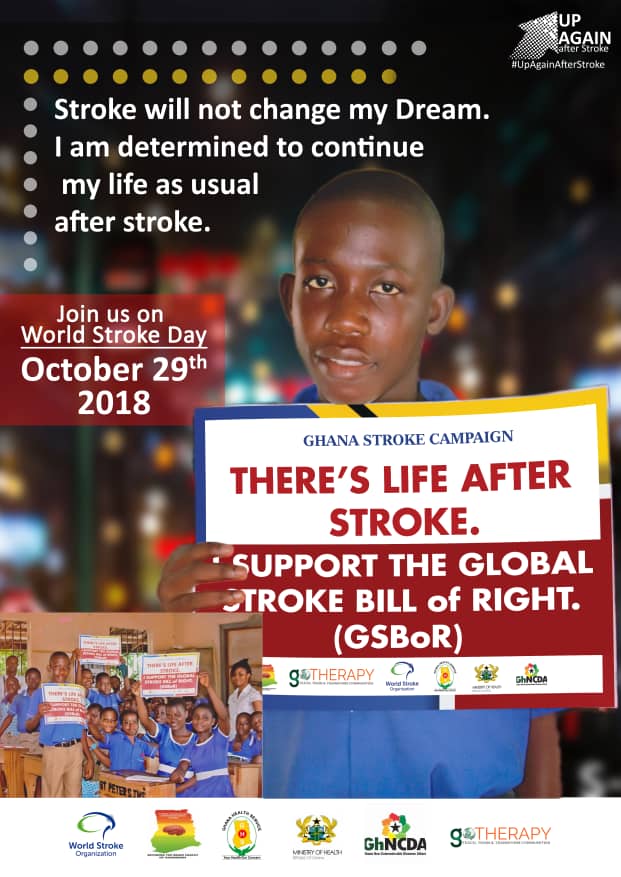
Ghana stroke support organisation is honoured and motivated by World Stroke Campaign Award 2018

Stroke Association Support Network Ghana (SASNET Ghana) share their thoughts on being selected as the winner of the World Stroke Campaign Award 2018 in the Low-Middle Income Country category. 


SASNET Ghana has been involved in organising World Stroke Day events since our establishment in 2012. SASNET Ghana's year round work is focused on raising awareness of stroke and supporting people living with stroke to improve their quality of life though our outreach program, Community Stroke/NCDs Awareness and the Community Life After Stroke Program (CLASP). 

The 29th October every year is a special day in the calendar for SASNET Ghana and we use World Stroke Day to:
1. Remind Ghanaians that stroke is a global health burden and the incidence of stroke is increasing in Africa
2. Take the opportunity to involve the media in issues relating to stroke and so raise the profile of stroke across the country 
3. Engage a range of health professionals to contribute in raising awareness at their respective hospitals, clinics and health centers across the country
4. Challenge the myths ,superstitions and other beliefs around stroke and to provide full and accurate stroke information

World Stroke Day events over the years continue to give SASNET Ghana the opportunity to involve academics, researchers and government officials in our work and their inputs and research are an invaluable resource for our activities.


SASNET Ghana's World Stroke Campaign Award 2018 in the Low-Middle Income Country category is an honour. The award is motivation for all members of SASNET Ghana. This gives us the reason to go the extra mile, especially as we are determined to use an innovative approach to educate and to disseminate stroke information in Ghana. The award must also be attributed to the work of the Ministry of Health, the Ghana Health Service and members of the Health Committee in Parliament, all of which have supported our work. 

The Ghanaian Government is developing strategies to achieve the targets of Sustainable Development Goal 3, Good Health and Well Being and SASNET Ghana will use this opportunity to gain support from the Government to launch The National Act F.A.S.T Campaign.

Our special thanks goes to: Rev.Dr. Immanuel Alpha-Christ, Chief Dr.Ben S.Jabuni and the entire SASNET Ghana Campaign team led by Faustina Larbi, Stroke Health Promotion Manager, all the stroke survivor members, the stroke multidisciplinary team, Korle Bu Teaching Hospital, Military Hospital, Komfo Anokye Teaching Hospital, Ridge Hospital, Trust Hospital and last but not least, Ad Adams Ebenezer ,the Executive Director for Stroke Support Operations at SASNET Ghana.


Monday, August 12, 2019

Seven Minutes in Stroke - Benjamn T. King

Dr Benjamin King from  the Department of Neurology, Dell Medical School and the University of Texas submitting author of the manuscript 'Optimal Delay Time to Initiate Anticoagulation after Ischemic Stroke in Atrial Fibrillation (START): methodology of a pragmatic, response-adaptive, prospective randomized clinical trial.' published in the International Journal of Stroke. 

1.      What inspired you towards neuroscience?
Unsurprisingly, I came to the field of neuro-epidemiology in a roundabout way, but the neurosciences were always a focus. My undergraduate program at Bard College provided the opportunity to partner with a team building a zebrafish neuroscience lab from the ground up. I was thrilled by my time studying the mechanism of addiction in this model, but I was also determined to move on to human subjects research. From there I went to work at inpatient psychiatric care facilities for a while, but never left the mind/brain question behind.

2. Why stroke?
As we all know, stroke results in a massive amount of disability and death. Public health training recognizes the benefits of addressing the largest drivers of disease burden such as this. Moving the needle even slightly in the prevention, care, or recovery from stroke can lead to inflated population health benefits. I was developing and managing research in emergency medicine when our first acute ischemic stroke trial came along.  It didn’t take long before that became our focus.
I'm lucky to really love the work I do

3.      What have been the highs so far?
I’m lucky to really love the work I do. There is something special that happens when a completely new research question gets introduced – usually when one of my clinician partners kicks down my door out of the blue – and we get to start solving a design question from scratch. There is also a great feeling when you get to see the work you do as an epidemiologist lead to changes in service delivery.  Add to that any and every time I get to take a crack at a clean dataset …and there are too many highs to count.

4. What have been the lows?
Peer-reviewed rejections of grant proposals never seem to get easier.  I’m proud of our wins, but I’m still learning to shake off the losses.

5. How do you balance work life with the needs of home life?
My wife and I both work long hours. She has a background in social work, from before her law career, and does a good job of reminding both of us about the importance of self-care. Setting aside time for ourselves is key. It requires hard work at both ends of the spectrum.

6. Who are your most important mentors and how did you find them?
Dr. Truman Milling hired me to build the Emergency Medicine research program in Austin and we have been working and writing together ever since. It is a truly rare thing to find a clinician with his gift for writing and the technical aspects of research design. When Dr. Steven Warach relocated to Austin from his position as the head of intramural research at NINDS our team leapt at the chance to manage his research program. I have been benefiting from his leadership ever since.  His perspective and insights have literally helped to shape the modern era of vascular neurology practice.
Finally, my epidemiologic training was mentored by some of the greatest methodologists in both epidemiology and biostatistics. My doctoral advisor, Dr. Steven Kelder, has shown me over and over that the field of epidemiology can be used to enact real, systemic changes by studying and testing solutions to complex problems. I first met Dr. Kelder during the master’s program, when I walked into his office unannounced and asked for a job… over a decade before asking him to be my advisor.

7. What are your most important collaborations and how have you built them?
As an epidemiologist I get to work in and around a lot of different specialties. One of my favorite endeavors is the collaboration built to connect our work in the tertiary care setting with housing and homelessness service agencies in our local community. In fact, my dissertation was a deep dive into the psychometric and validation testing of a popular vulnerability score measure used for housing resource prioritization. Honorable mentions go to our collaborators in the Lone Star Stroke Consortium, my partners in the Dell Medical School’s Department of Population Health and the Division of Psychology.


Wednesday, August 7, 2019

World Stroke Campaign award a testament to life after stroke


Michael Uchunor, founder of the stroke support organisation Michael and Francisca Foundation in Nigeria, wins the 'Award for Individual Achievement' in recognition of his work in support of the World Stroke Day campaign 2018. 


I was 33 years old when I had my stroke in 2012. I used to drink a lot of alcohol and smoke cigarettes. I think I may have been hypertensive before the stroke occurred but I have no way of knowing since I had never checked my blood pressure before then.

I now want to identify stroke survivors so that we can advocate together for better stroke awareness and care for stroke survivors in Nigeria. Stroke advocacy and campaigning are important in order to educate the public about the symptoms of stroke and the importance of getting to the hospital quickly. It also raises awareness on profound and universal impact of stroke on individuals and families so that decision makers understand the importance of resourcing quality education, treatment and long term care and support for stroke survivors and care givers.

Stroke support organisations like Michael and Francisca Foundation still have to focus on grassroots outreach to raise awareness as many people in Nigeria do not have access to media campaigns. This outreach also gives us greater understanding of the lived experience of stroke that we can share with decision makers.

I get involved in World Stroke Day on 29th October every year to underscore the serious nature and high rates of stroke, to raise awareness of the prevention and treatment of the condition and ensure better care for survivors.

When I had my stroke, there was nothing like a stroke support group near me that I could access, but I know that my recovery would have been easier if I had been connected with such a group. A group where I could meet other stroke survivors with similar effects; get to know and communicate with one another, share stories, challenges and inspiration, learn about promising treatment and new research. This gap gave birth to the Michael and Francisca Foundation which is a place where stroke survivors and their relatives connect with one another. We now have 128 members and still counting.

Receiving the Award for Individual Achievement from the World Stroke Campaign is testament to me and other stroke survivors that there can be life after stroke. I am thankful for my faith and to my family and friends who stood by me. This is just the beginning of my stroke campaigning in Nigeria.

Featured Post

Epidemiologic profiling for stroke in Nepal: Endeavour towards establishing database

Resha Shrestha  @avi_neuro. , MS 1 , Avinash Chandra, MD 1 , Samir Acharya, MS 1 , Pranaya Shrestha, MS 1 , Pravesh Rajbhandari, MS 1 , Re...