Showing posts with label Africa. Show all posts

Friday, October 25, 2019

Stroke in Sierra Leone (SISLE) research group aims to understand and improve stroke care

Stroke in Sierra Leone (SISLE) is a research collaboration funded by the National Institute of Health Research (NIHR), the UK’s largest funder of health and care research, between King's College London and the College of Medicine and Allied Health Sciences (Freetown). This group is carrying out mixed methods research to try and understand stroke in Sierra Leone.

Here in this introductory blog, the team gives us an overview of the project, and the impact of stroke in this country.

Pa Alusine

The Kamara family were enjoying a boisterous Sunday lunch in the family home after church.  As usual Pa Alusine, the head of the family presided over the lunch, his sense of humour and playful nature had the grandchildren squealing with laughter.

He excused himself briefly to go to the bathroom, when his daughter looked back and saw him gripping the door frame and making a funny face, she thought it was another joke for the grandchildren.

It took a few moments to realise something wasn't quite right.

Pa Alusine was gripping the doorframe because he had lost the strength in his right leg. He was unable to speak, he couldn’t ask for help.

The family reacted quickly and laid him on the bed. They called a nurse who lived in the community nearby, she arrived at the bedside soon after. On her advice the family placed him in a car and drove directly to Connaught Hospital.

Pa Alusine had had a stroke, something that is not well understood in Sierra Leone.

Stroke in Sub Saharan Africa

The disease burden of stroke is increasing in this region because of increases in poor diets, smoking, alcohol consumption and lack of exercise.

As a result of these changes more people in cities like Freetown are at risk of non-communicable diseases such as stroke.

However, many things about stroke in this region are not understood, such as; which ethnic groups are most at risk? How long does it take patients to come to the hospital after a stroke? What is the cost of care? How do survivors’ lives change as a result of stroke?

The Connaught Hospital Stroke Register

The SISLE project is using a stroke register model to collect data about strokes.

A stroke register is an observational database that is focussed on gathering clinical information and data on the outcomes of patients. These observations can then be used to both understand and improve stroke care.

The stroke register that we have launched at Connaught Hospital, the main government referral Hospital in Freetown, is Sierra Leone’s first. It is collecting data, at admission, 90 days, 12 months, and 2 years post stroke.

The information being collected is on sociodemographic factors, stroke risk factors, stroke severity, treatment, and outcomes. We have now been collecting for 199 consecutive days and have 221 participants on the register

We are beginning to understand stroke in Sierra Leone much better, however there are some aspects of stroke in this country, that a stroke register will not help us to research.

These are the aspects of stroke that are linked to societal and cultural perspectives, and inherent beliefs. To be able to understand this we have reached out into the community. The Stroke survivors’ group is educating physicians and researchers on the experiences in Sierra Leone.

Life after Stroke in Sierra Leone

We are beginning to understand through our work with the stroke survivors’ group, the challenges of living with stroke disability in Sierra Leone

Lack of public awareness about stroke has led to there being societal stigma and discrimination directed towards stroke survivors, this makes their post stroke life more difficult.

One of the survivors highlighted how taxi drivers wouldn’t allow people with disability into their vehicle

Some survivors even highlighted how because they now had some form of disability, they felt like their communities were shutting them out, they felt ostracised.

World Stroke Day

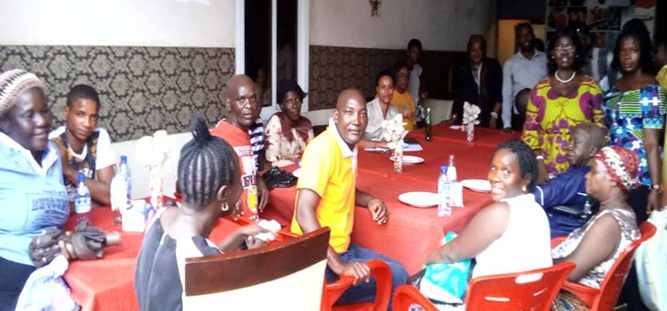
With this in mind, the stroke survivors suggested that we carry out a walk for World Stroke Day to raise awareness of disability and hopefully reduce social stigma.

On the 29th October, the stroke survivors, members of the SISLE team, and the general public will be carrying out an awareness walk on city beach, Freetown. This will form the Sierra Leone leg of the World Stroke Organization World Stroke Day Relay.

Friday, October 4, 2019

With hindsight Moyosore Ayah knows the importance of stroke awareness and prevention #DontBeTheOne

Moyosore Ayah, founder of new WSO stroke support organisation member, IDA Stroke Awareness Foundation in Nigeria, tells us about her commitment to stroke prevention and awareness


What has inspired you to be involved in stroke support?
Around spring 2010, my precious mother had a stroke, which not only came with its physical impediments but also emotional and mental. The physical impediments meant that she was paralyzed on the left side of her body along with speech impairments that affected her communication.

I always thought to myself in hindsight that if my sister and I were enlightened on the signs and symptoms of stroke, we could have taken preventive measures to avoid a stroke and coma after she complained of fatigue. This experience taught me a lot of basic and essential facts about stroke, which acted as a catalyst to inspire and motivate me to create and spread awareness and consciousness about stroke. Plus connecting with others to help ease the depression and isolation so common after a stroke. 

What does stroke support look like in your country? 
Stroke remains a huge problem in Nigeria and globally. There is not adequate support for stroke patients in Nigeria, for example in the biggest National Hospital only 3 hours a week is dedicated for stroke clinics to attend to the needs of stroke patients.


How did the project come about?
This project was born out of my emotions from the experience with my mum, which led to me having this insatiable passion to educate people on the risks, signs and symptoms of a stroke.

What have been some of the outcomes of the projects? 
I consider all IDA Stroke Awareness Foundation projects as successful; creating awareness about stroke, giving medical recovery accessories to those who need them during our outreach and organizing a stroke clinic in a rural community with minimal health care.

What has been the feedback from stroke survivors to the project?
The response and feedback from all our outreach has constantly reminded us of the reason why we embarked on this mission. The joy and satisfaction derived from this act of altruism cannot be quantified. The testimonies from stroke survivors and individuals who benefited from our outreach has been the fuel that drives us to continue this mission.

What has been the response from others – community, doctors, and politicians?
Doctors and medical professionals are willing and ready to help in any way they can and we always get volunteers. Volunteers have the passion and willingness to serve and we are elated to provide this platform with an opportunity to serve humanity. 

What would you say to other people to make them take stroke prevention seriously?
Stroke is a brain attack that can lead to disabilities and ultimately death. Please pay close attention to your health, always monitor your blood pressure if you have a history, heart disease, diabetics, go for medical check ups and always take your medications as directed. All the signs of stroke shouldn’t be taken lightly: face numbness, arm weakness and speech difficulty. If you consider someone may be having a stroke, call an emergency service if available or have someone call for you and get to the hospital immediately. Please do not wait for the next second. DON’T BE THE ONE.


Friday, September 13, 2019

Improving stroke prevention and support in Tanzania through primary health care


Joel Samson Ruvugo is a primary health care consultant in Dar es Salaam
Tanzania, here he talks about his commitment to increasing stroke prevention and support through his public health skills and knowledge.


What has inspired you to be involved in stroke support?
For me getting involved in stroke support is both an informed and worthwhile decision. Stroke support, and organisations that provide it, are needed urgently in Tanzania. I feel a responsibility to invest the knowledge and skills that I have gained in my public health work in communities through a cascading approach.

What does stroke support look like in your country?
There are a good number of health facilities in Tanzania that offer cardiovascular disease (CVD) treatment services, including clinical assessment, MRI, CT-SCAN, ECHO, ECG, X-ray, and weight, body and waist mass indexes. However, CVD prevention and post stroke care services for stroke survivors need to be improved in order to ensure long term impact for stroke survivors, family members and the general community.

How did the project come about?
 As a tutor with the People’s Open Access Education Initiative, which partners with EUCLID, I facilitate a topic on NCDs, in particular CVD and diabetes mellitus. In collaboration with different research institutions we provide public health capacity building to health care professionals in low and middle income countries, where the burden of NCDs is growing. I am in close contact with people affected by stroke and we have discussed many issues in regard to the impact of stroke, and family and community needs. I have used this learning and insight to develop my stroke support activities.

What have been some of the outcomes of the project?
There is increasing awareness of stroke and sensitisation of health services to the needs of stroke patients and their carers. They are increasingly accessing available health facilities for stroke assessment and rehabilitation. There are now health and heart clubs in different parts of the country as a result of the project’s stroke management cascading model.

What has been the feedback from stroke survivors to the project?
The feedback from stroke survivors is that there has to be public health promotion, which promotes healthier lifestyle behaviours and support for the development of approaches that enable behaviour change. I see the need for regular provision of stroke education and health promotion, information systems that best support the stroke strategy, ICT materials and the promotion of widespread and consistent use of patient care guidelines in all settings in the country.

What has been the response from others – community, doctors, politicians?
The community, doctors and politicians recognise the need to have stroke support organisations that are accessible and reliable, with focal centres and human and financial resources to be able to execute integrated stroke interventions in any given local setting in Tanzania.
  
What would you say to other people to make them take stroke prevention seriously?
Primary health care is key to stroke prevention. There is a need to establish a framework for educating health care professionals to address the social determinants of health in Tanzania. CVDs are silent killers, therefore, individuals, family members and communities must be aware of the impact of CVDs to their health, and risk factors that they can manage.


Wednesday, August 14, 2019

Ghana stroke support organisation is honoured and motivated by World Stroke Campaign Award 2018

Stroke Association Support Network Ghana (SASNET Ghana) share their thoughts on being selected as the winner of the World Stroke Campaign Award 2018 in the Low-Middle Income Country category. 


SASNET Ghana has been involved in organising World Stroke Day events since our establishment in 2012. SASNET Ghana's year round work is focused on raising awareness of stroke and supporting people living with stroke to improve their quality of life though our outreach program, Community Stroke/NCDs Awareness and the Community Life After Stroke Program (CLASP). 

The 29th October every year is a special day in the calendar for SASNET Ghana and we use World Stroke Day to:
1. Remind Ghanaians that stroke is a global health burden and the incidence of stroke is increasing in Africa
2. Take the opportunity to involve the media in issues relating to stroke and so raise the profile of stroke across the country 
3. Engage a range of health professionals to contribute in raising awareness at their respective hospitals, clinics and health centers across the country
4. Challenge the myths ,superstitions and other beliefs around stroke and to provide full and accurate stroke information

World Stroke Day events over the years continue to give SASNET Ghana the opportunity to involve academics, researchers and government officials in our work and their inputs and research are an invaluable resource for our activities.


SASNET Ghana's World Stroke Campaign Award 2018 in the Low-Middle Income Country category is an honour. The award is motivation for all members of SASNET Ghana. This gives us the reason to go the extra mile, especially as we are determined to use an innovative approach to educate and to disseminate stroke information in Ghana. The award must also be attributed to the work of the Ministry of Health, the Ghana Health Service and members of the Health Committee in Parliament, all of which have supported our work. 

The Ghanaian Government is developing strategies to achieve the targets of Sustainable Development Goal 3, Good Health and Well Being and SASNET Ghana will use this opportunity to gain support from the Government to launch The National Act F.A.S.T Campaign.

Our special thanks goes to: Rev.Dr. Immanuel Alpha-Christ, Chief Dr.Ben S.Jabuni and the entire SASNET Ghana Campaign team led by Faustina Larbi, Stroke Health Promotion Manager, all the stroke survivor members, the stroke multidisciplinary team, Korle Bu Teaching Hospital, Military Hospital, Komfo Anokye Teaching Hospital, Ridge Hospital, Trust Hospital and last but not least, Ad Adams Ebenezer ,the Executive Director for Stroke Support Operations at SASNET Ghana.


Wednesday, August 7, 2019

World Stroke Campaign award a testament to life after stroke


Michael Uchunor, founder of the stroke support organisation Michael and Francisca Foundation in Nigeria, wins the 'Award for Individual Achievement' in recognition of his work in support of the World Stroke Day campaign 2018. 


I was 33 years old when I had my stroke in 2012. I used to drink a lot of alcohol and smoke cigarettes. I think I may have been hypertensive before the stroke occurred but I have no way of knowing since I had never checked my blood pressure before then.

I now want to identify stroke survivors so that we can advocate together for better stroke awareness and care for stroke survivors in Nigeria. Stroke advocacy and campaigning are important in order to educate the public about the symptoms of stroke and the importance of getting to the hospital quickly. It also raises awareness on profound and universal impact of stroke on individuals and families so that decision makers understand the importance of resourcing quality education, treatment and long term care and support for stroke survivors and care givers.

Stroke support organisations like Michael and Francisca Foundation still have to focus on grassroots outreach to raise awareness as many people in Nigeria do not have access to media campaigns. This outreach also gives us greater understanding of the lived experience of stroke that we can share with decision makers.

I get involved in World Stroke Day on 29th October every year to underscore the serious nature and high rates of stroke, to raise awareness of the prevention and treatment of the condition and ensure better care for survivors.

When I had my stroke, there was nothing like a stroke support group near me that I could access, but I know that my recovery would have been easier if I had been connected with such a group. A group where I could meet other stroke survivors with similar effects; get to know and communicate with one another, share stories, challenges and inspiration, learn about promising treatment and new research. This gap gave birth to the Michael and Francisca Foundation which is a place where stroke survivors and their relatives connect with one another. We now have 128 members and still counting.

Receiving the Award for Individual Achievement from the World Stroke Campaign is testament to me and other stroke survivors that there can be life after stroke. I am thankful for my faith and to my family and friends who stood by me. This is just the beginning of my stroke campaigning in Nigeria.

Thursday, June 27, 2019

The burden of stroke is unjust and action is needed

The Tanzania Heart Club became a stroke support organization member of the World Stroke Organization in 2019. Here, Hussein Liobike, a community health worker, tells us why he was motivated to start the organization to fight against the burden of stroke and heart attacks and get involved in stroke support.


·         What has inspired you to be involved in stroke support?


The inspiration is that I want to support stroke survivors as they face many challenges, including social and economic challenges and I want to help to unite them so that they can have a stronger voice in our country and globally. Stroke is a leading cause of death and disability. For stroke survivors and their families it can result in economic hardship. My inspiration is to contribute to reducing strokes in our society and to ensure those that have had a stroke access support. National strategies don't always prioritise their needs, so we need to make sure that they have the appropriate support that they need and to create centres and opportunities for stroke survivors to access services.

·         What does stroke support look like in your country?

Stroke support in Tanzania is a still problem because many people don't understand what life after stroke is like and what the needs of stroke survivors are. So we are raising awareness about life after stroke and in the meantime we must support survivors' needs. We are working with stroke survivors to fully understand their experience so that we can provide appropriate support. We are working with families and stroke survivors to support them in daily activities and to keep active. 

·         How did the project come about?

The project came about after recognising the challenges stroke survivors face and the fact that there is a national stroke burden in Tanzania that is leading to a large number of disabilities and deaths. The burden of stroke and loss of life and disabilities is unjust and I knew that we must take action. 

·        What has been the feedback from stroke survivors to the project?

The stroke survivors that we support are really positive about the help that we can give, they remain engaged with us and report that they are making progress in their recovery and that we give them hope. The challenge is that we need more tools to support us in our life after stroke activities. We also have to take time to help stroke survivors understand what recovery after stroke can be like, some think that they can be cured by taking some pills. 

·        What has been the response from others – community, doctors, politicians?

·       In the community the mindset about stroke is changing, people are recognising that they need to seek early treatment from hospitals rather than from traditional healers, and that rehabilitation is essential for recovery.  Doctors are increasingly understanding how important rehabilitation is to the survivors and  some of them are providing rehabilitation services. However these services are not accessible to everyone as they cost money, so we try to advocate for survivors to access free rehabilitation. Politicians are beginning to understand the need for rehabilitation and I am talking with parliamentarians about rehabilitation services in Tanzania, but this will take time as they have many competing priorities.

·        What would you say to other people to make them take stroke prevention seriously?

We are sharing with people that stroke can attack anyone, at any time and any age, and can therefore affect peoples' economic viability. We stress the importance of taking stroke prevention seriously by knowing the risk factors for stroke. We are promoting the importance of paying attention to your health and to engage in physical activities, reduce salt and to be aware of and manage high blood pressure. We know that behaviour change can be difficult, so we are persevering!


Tuesday, June 4, 2019

Changing the devastating effects of stroke in Malawi

The Malawi Stroke Unit Team has a goal to provide a cost-effective stroke unit that will help revolutionise the lives of people in Malawi that are affected by the implications of stroke. 


University College London Hospitals has partnered with Queen Elizabeth Central Hospital, Blantyre, Malawi, the Malawian government, Liverpool University (via the Wellcome Institute in Malawi), and UCL, to build and then run a stroke unit. 

The UK team are helping to plan the unit, helping to develop the unit operational systems and will help train the staff, but the unit itself will be led and run by the Malawian clinical team. The aim of the partnership is to develop a sustainable model for stroke care in Malawi. Currently there are no stroke units at all in the country, but very high rates of stroke incidence and stroke related death. 

Stroke is a common presentation at Queen Elizabeth Central Hospital and is in the top five reasons for hospital admission and top three reasons for in-hospital mortality (SPINE 2012 analysis).  Malawi currently has a poor stroke outcome compared to its neighbouring countries, with local data showing that nearly 40% of people having a stroke die at six months.

Specific risk factors for death are increased stroke severity, advanced immunosuppression from HIV infection and age. The former two risk factors are potentially preventable with easily achievable intervention such as early swallow screen, immediate therapy (where guardians could be trained to deliver this), close vigilance for infections whether it be central nervous system infections, aspiration pneumonia or urinary tract infections, and initiating and maintaining secondary preventative treatment. 

The target over the next 10 years is to deliver a seven-bedded stroke unit that is embedded within Queen Elizabeth Central Hospital. This unit will serve as a national centre of excellence for delivery of stroke care, training and research to further inform best practice, and ultimately improve the burden of stroke in Malawi. The aim is also to ensure that the stroke unit is culturally appropriate and sensitive to the limited resources available in Malawi.

This partnership offers collaborative opportunities for the stroke multi-disciplinary team, both in the UK and Malawi. Thanks to funds from TNM (a Malawian telecommunications company), construction of the building has already begun and is scheduled for completion by Autumn 2019 along with an ongoing training and exchange programme.

For more information on supporting the partnership please visit:


Tuesday, April 9, 2019

Hope and support on Stroke Survivors' Day in Ghana

16th March is National Stroke Survivors' Day in Ghana and this year, stroke support organisation Stroke Association Support Network Ghana (SASNET Ghana), ensured that the day was full of hope and support for people affected by stroke. 


SASNET Ghana is a stroke support organisation member of the World Stroke Organization and a member of the Ghana NCD Alliance. SASNET Ghana wants a nation that recognises stroke and other non-communicable diseases (NCDs) as a public health priority. Its aim is that all Ghanaians are educated about the risk factors and signs of stroke, and all those affected by stroke have access to the best possible treatment and rehabilitation. SASNET Ghana campaigns for better stroke services and provides prevention awareness and rehabilitation recovery support services for stroke survivors.

2019 marked the second National Stroke Survivors' Day and SASNET Ghana used the day to promote the message that there is life after stroke and that with the right information, treatment, care and support, people affected by stroke can have improved outcomes. The day was also an opportunity for SASNET Ghana to mobilise the general population to support people affected by stroke and to challenge stigma and discrimination.

As part of their activities for the day SASNET Ghana held a Community NCD Awareness Forum in partnership with the Ghana NCD Alliance. In his welcome  address, Mr. Ad Adams Ebenezer, Vice Chairman of the Ghana NCD Alliance and Director of Operations for SASNET Ghana, focused on NCD risk factors and the increasing incidence of hypertension and stroke across the country. Ad Adams emphasized the need for a multi-stakeholder approach to combat NCDs, including the Government, health sector, civil society organisations and citizens working together.

During the Forum people living with NCDs shared their experiences. Mr. Samuel Sedodo talked about the effects he has experienced due to his stroke. He highlighted that caring for people affected by stroke is challenging and that there needs to be increased support from the Government for long term care. He also called on young people to take their health seriously.


Monday, April 8, 2019

Partnership working to improve stroke care in Nigeria

Founded by stroke survivor Michael Uchunor, Michael and Francisca Foundation is helping to respond to the burden of stroke in Nigeria by working in partnership with other organisations.


The stroke support organization (SSO), Michael and Francisca Foundation in Nigeria aims to raise awareness about stroke prevention and to provide support for all those impacted by stroke.

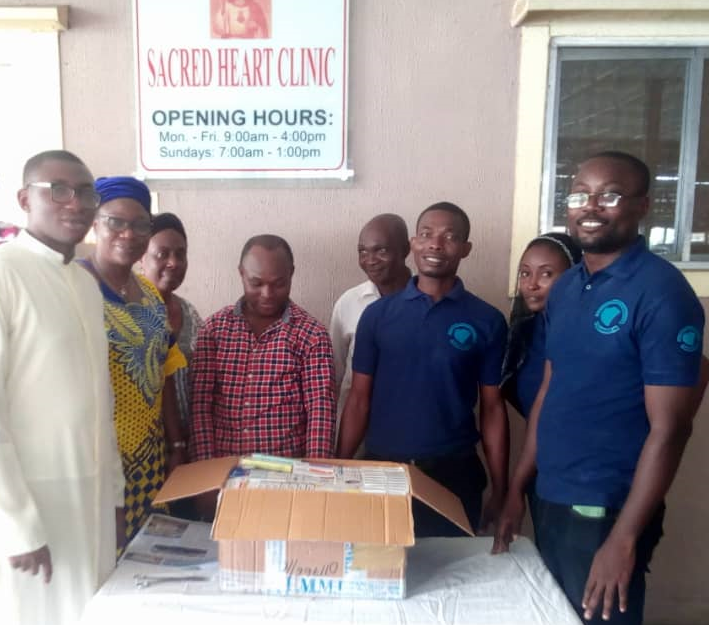
The Foundation has developed a partnership with the Sacred Heart Catholic Clinic, which received a donation of medications to manage high blood pressure. Through this partnership, Michael and Francisca Foundation is able to refer people at risk of stroke and stroke survivors to the clinic, where they can access medication to manage their high blood pressure, a leading risk factor for stroke, free of charge.

Michael Uchunor, founder of the SSO, works closely with the pharmacist and doctors of the clinic to ensure that the people his SSO supports have access to the medication they need. This partnership means that not only does the Michael and Francisca Foundation raise awareness of high blood pressure as a risk factor for stroke, it can also support people to take immediate action. 'It has been wonderful to help people who cannot afford to buy drugs themselves, to access what they need', say Michael. 

Michael also collaborates with the Catholic Church in Nigeria, which is a key provider of healthcare across the country, to raise awareness of stroke and its risk factors among the Catholic congregation. 


Monday, March 18, 2019

Leading the way in home based care for stroke survivors in Zambia


New stroke support organisation (SSO), National Stroke Aid, Zambia leads the way in home based care for stroke survivors.


National Stroke Aid, Zambia has become the latest member of WSO. The SSO was founded at the beginning of 2019 by Mr. Phanuel Mabbola, a physiotherapist working in rehabilitation with stroke survivors. Phanuel recognised the extent to which stroke survivors are neglected or ignored in the city of Lusaka and he decided to establish a home based physiotherapy service. As well as physiotherapy, the service will also include healthy lifestyle education.

In Zambia, stroke is a leading cause of death and disability and is increasingly affecting a younger population, with hypertension the most common risk factor.

Although in the course of his work Phanuel observed that people in the community know that stroke is sudden and can happen to anyone at any time, prevention and managing risk factors is less well understood. In addition, many stroke survivors have little or no access to rehabilitation and recovery services.

Addressing these needs is the primary focus of the newly established National Stroke Aid, which will provide stroke awareness, healthy life style education and facilitate or provide home based care to stroke survivors. The objectives of the SSO are:

·        To help reduce the incidence rates of stroke through sensitisation of the community on causes of stroke and educating society on the need for healthy life styles
·        To restore stroke survivors’ body functions through physiotherapy and provide occupational and home based care
·        To advocate for policy that includes stroke survivors’ empowerment, and involvement in decision making institutions
·        To organise workshops or seminars and hold social gatherings for capacity building among the stroke survivors and the membership of organisation

National Stroke Aid will draw its membership from the community, in particular those that have been affected by stroke.  

In January, the Permanent Secretary of the Zambian Ministry of Health recommended National Stroke Aid for registration as an NGO; recognising its role in complementing government efforts to provide home based care to stroke survivors, and that the organisation’s activities are in line with the National Health Strategic Plan.

We are excited to welcome National Stroke Aid to the global SSO network and commend Phanuel on his commitment to providing home based care.


Tuesday, October 2, 2018

The reality of stroke in Kenya is heard at the UN High Level Meeting

Edward Konzolo, secretary of WSO stroke support organization member, Stroke Association of Kenya, was in New York last week at the UN High Level Meeting on NCDs.  


Edward attended this important meeting as both a person living with an NCD and as a member of a patient stroke support organisation. Edward took the opportunity to highlight his experience of stroke and the work that his organization is doing to reduce the burden of stroke in Kenya. It was a great opportunity for Edward to share the work that the Stroke Association of Kenya does; its strategies for engaging communities through stroke support groups, which are run with very little resource but great commitment from members. 

Edward says, 'I made myself heard! I talked to ministers of health from Kenya, Rwanda, Denmark and the USA. I even had some time with pharmaceutical representatives.

In our meeting we talked about how we can take the NCD agenda and discussions from the village and be heard at the UN. We stressed the importance of universal health care and action that needs to taken by governments. 

I talked about how stroke has affected my life. I lost my job and I was traumatized by the loss of friends. This was made worse by the lack of medication and rehabilitation . I said that governments should take steps because the disease affects the productive population. We also need to take action to reduce the stigma and discrimination that people face.

This was a valuable opportunity for me to talk about the reality of stroke in Kenya at such a high level meeting. I return to Kenya motivated to continue the fight against stroke!'


Read more about the work of the Stroke Association of Kenya here


Friday, July 6, 2018

Stroke Association Support Network Ghana adds its voice to the #enoughNCDS Campaign

As the WSO leadership participated in the Civil Society Hearing at the UN in New York in preparation for the High Level Meeting on NCDS in September, WSO Stroke Support Organisation member, Stroke Association Support Network Ghana put stroke on the agenda of the #enoughNCDS Campaign in Ghana. 


At the end of June the Ghana NCD Alliance held its planning meeting for national engagement in the  UN High Level Meeting on Non-Communicable Diseases (UN HLM) to be held in September 2018. 
Members of the Ghana NCD Alliance, which includes the Stroke Association Support Network Ghana are aiming to raise awareness of Ghanaian political and major stakeholders on the need to prioritize NCDs as a national issue ahead of the UN HLM. Mr. Ebenezer Adams, the Vice Chairperson of the Ghana NCD Alliance, and member of the Stroke Association Support Network Ghana, gave the welcome address. He reminded participants that  NCDs, including stroke, affect people in every country, rich and poor, old and young, in cities and in villages, the privileged and the vulnerable. At some point in our lives, they are likely to affect each and every one of us.

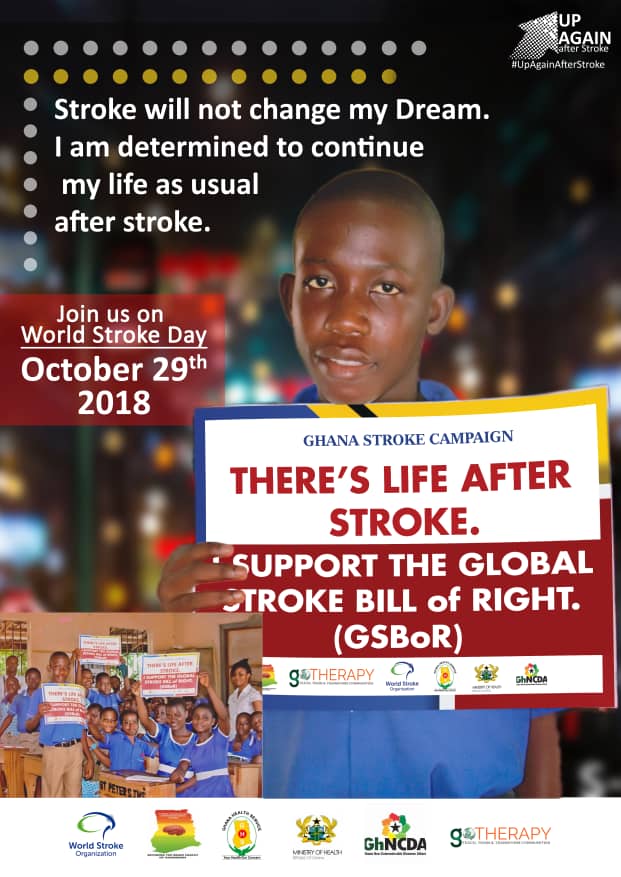
On 7th August, a National High Level meeting was organised by the Ghana NCD Alliance. The Government was represented by the Hon Minster of Planning and the Chairman of the Inter Ministerial Committee. The Stroke Association called for improvement in the lives of people affected by stroke in Ghana, in particular through the national Livelihood Empowerment Program and through the realisation of the Global Stroke Bill of Rights.

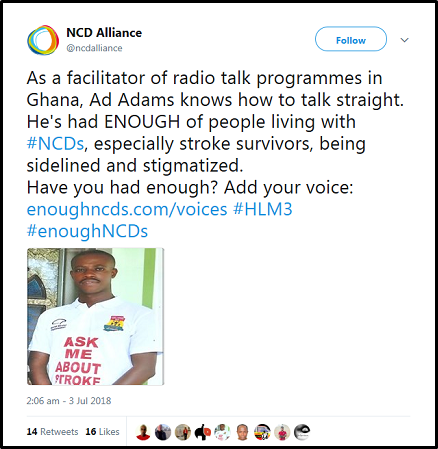
Ebenezer Adams has added his voice to the #enoughNCDS Campaign 


Read more about the Stroke Association Support Nework Ghana SSO Spotlight


Monday, June 25, 2018

Stroke Foundation Uganda, a new WSO member, gives hope to stroke survivors and their families


1    


Ibrahim Bukenya is the founder and principal physiotherapist at the Stroke Rehabilitation Center, home to the Stroke Foundation Uganda, in Kampala. 

What has inspired you to be involved in stroke support?
The inspiration was when I had a challenge in taking care of a mother who had a stroke and later passed away and the fact that I had worked with the Stroke Rehabilitation Center for the last 8 years by then. There were challenges other stroke survivors were going through and Uganda’s burden of stroke is increasing every day. I want to help prevent people from going through this challenging condition, to minimise adult disability caused by stroke and to have a stroke free Uganda.

What does stroke support look like in your country?
Stroke support in Uganda is mainly about stroke survivors coming together and encouraging each other to reach a common goal which is recovery and to go back to work. The Stroke Rehabilitation Center helps the survivors who cannot afford the rehabilitation costs. Our stroke support groups have volunteers who go to visit the survivors to encourage them. The stroke support group organises the World Stroke Day event with different activities to help increase awareness.

How did the project come about?
The project came about after realising the challenges the stroke survivors go through and the       national stroke burden.                                                                                                                                                          
What have been some of the outcomes of the project?
About 2% of stroke survivors have recovered to 90% and gone back to work.
Stroke survivors who have attended stroke support groups and rehabilitation treatments are promoting our name across the country, thanking and talking good about giving them hope again and families have been saved from tearing apart due to the counselling given to both care givers and survivors.

What has been the response from others- community, doctor’s politicians?
In the community the mindset about stroke has changed from the witchcraft perspective to rehabilitation and seeking early treatment from hospitals rather than traditional healers.
Doctors are increasingly understanding how important rehabilitation is to the survivors and we are already collaborating with some of them from the primary health facilities, however, other doctors still think negatively that rehabilitation treatment is competition to their work.
Politicians are getting to understand rehabilitation treatment through the parliamentary health weeks and through their relatives that have attended the support groups.

Stroke can attack any one at any time affecting the economic viability of someone, therefore stroke awareness prevention should be taken so seriously by knowing the risk factors for stroke, the signs and symptoms and in case someone gets a stroke to rush the person to the nearest hospital.

For more information:


Wednesday, March 14, 2018

Raising stroke awareness among communities in Nigeria


Michael Uchunor, a stroke survivor and founder of the Michael and Francisca Foundation, a registered non governmental organization in Nigeria, and member of the World Stroke Organization, has started an important stroke awareness campaign.


'I was 33 years old when I had my stroke in 2012. I used to drink a lot of alcohol and smoke cigarettes. I think I may have been hypertensive before the stroke occurred but I have no way of knowing since I had never checked my blood pressure before then. That is why it is very important to have yourself checked. Important checks to prevent strokes include blood pressure, blood sugar and cholesterol. 

I now want to identify the stroke survivors, through my connection with Catholic parishes, to come under the umbrella of Michael and Francisca Foundation Group so that we can advocate together for better stroke awareness and care for stroke survivors in Nigeria. When I had my stroke there was nothing like a stroke support group in my area, but I know that my recovery would have been easier if I had been connected with such a group. A group where I could meet other stroke survivors with similar disabilities; get to know and communicate with one another, share stories, challenges and inspiration, learn about promising treatment and new research. This obvious void gave birth to the “Michael and Francisca Foundation” which is a stroke support group and a place where stroke survivors and their relatives connect with one another.

We started the Campaign on Stroke on the 4th of March 2018 and will continue until December. I have met with new stroke survivors and to my surprise one had never been to the hospital.

There are a lot of challenges, most of the stroke survivors don’t adhere to their medication, largely due to the costs and they prioritise being able to buy food. 


In Nigeria, we need to challenge the belief that only older people have a stroke. Stroke can happen to anyone at any age. We also need to raise awareness of the FAST message, of the signs to look for and the action to take:

Face: Drooping
Arms: Weakness
Speech: Difficulty, at which point it is
Time:  to call for medical help

Throughout the campaign we will be raising awareness and  helping people to take action to manage their stroke risk factors'.

For more information visit:
http://michaelfranciscafoundation.org/


Saturday, March 3, 2018

Rita Melifonwu, Ashoka Fellow, Founder and Chief Executive Stroke Action Nigeria shares her stroke support story


What has inspired you to be involved in stroke support?
My stroke support journey started as a teenager when my best friend’s father had a stroke in the 1970’s. When we went to visit him in the general medical ward at the teaching hospital it was frightening to see a previously active man paralysed, unable to speak and restricted to the bed. This made me want to know more about strokes so I ended up volunteering in Cheshire Homes in Uwani Enugu, Nigeria. Later my paternal aunt had a stroke whilst out shopping in Onitsha Nigeria. Without any ambulance to take her to the hospital or stroke unit care she had a tough time. Since then, I saw my father in law, my maternal aunt and my first cousin all have a stroke.  Apart from my maternal aunt, all these people have died. I came to realise early that stroke can happen to anyone and is no respecter of persons. I resolved to do everything I can to help prevent strokes.

How did the project come about?
As a senior nursing sister in London, UK, I soon realised that the majority of the black and minority ethnic patients on my ward either have one or two stroke risk factors, such as diabetes and hypertension, or, already have suffered a stroke. I then embarked on a massive strategic advocacy for better stroke awareness, prevention and care. This led to my winning the UK Department of Health’s Mary Seacole Nursing Leadership Award and establishing Stroke Action UK as a local stroke support organisation in Enfield Borough in March 2000. The charity supports stroke survivors, carers and at-risk people offering stroke advice, information, prevention advice clinic, rehabilitation and support to cope with life after a stroke. It is this model of care that has now been replicated as Stroke Action Nigeria since 2012.

What does stroke support look like in Nigeria?
Prior to the establishment of Stroke Action Nigeria in 2012 as a national stroke support organisation, there was no organised stroke support in Nigeria. Stroke patients were admitted into general medical wards if they were lucky to get to the hospital, and then, discharged home without any organised stroke care and community based support. At the inauguration of Stroke Action Nigeria on World Stroke Day 2012, we recruited and trained 28 Stroke Ambassadors (healthcare professionals, stroke survivors, carers, lay people). The Stroke Ambassadors were then supported to establish stroke support groups across eight states in Nigeria including: Abuja FCT, Anambra, Benue, Delta, Edo, Imo, Lagos, Ogun States.

Most recently however, there has been new stroke support organisations established by other people and this is good news for stroke survivors and carers in Nigeria.

What have been the highs so far for your project?
First and foremost, stroke survivors across eight states have access to basic stroke information, prevention advice and befriending through local stroke support groups. Furthermore, citizens have access to opportunistic community based health checks and prevention advice provided by our committed Stroke Ambassadors. We also have two Life After Stroke Centres in donated buildings in Abuja and Onitsha enabling stroke survivors and their carers to do extraordinary things.

Signing an MOU with the Federal Ministry of Health in 2013 was added value as it helped us to commence an annual Power to Stop Strokes Campaign incorporating the Stroke Assembly Conference and Walk and Run Against Strokes activity, as well as the inauguration of the first ever multi-disciplinary Nigeria Stroke Reference Group. These achievements enabled us to win the 2015 World Stroke Day Award.

What have been some of the outcomes of the projects?
For the first time in Nigeria, stroke is receiving national media and political attention due in part to our strategic advocacy. New stroke units have been established in Benin, Ilorin, Ibadan, Ife and Lagos. New stroke support groups have also emerged.

Stroke survivors and their carers are attending our Life After Stroke Centres to get ongoing support with their stroke recovery journey. Our Stroke Ambassadors are doing the best they can to facilitate the stroke support groups and Life After Stroke Centres with little or no financial support. There is so much work to be done and resources are needed to achieve positive outcomes.

A significant outcome is my appointment as an Ashoka Fellow for Health in July 2017. Over the coming years, we will be supported by the Ashoka Foundation to scale up our operations and make more impact.

What has been the feedback from stroke survivors to the project?
Stroke survivors and their carers are telling us that they are benefiting from the services that Stroke Action provides. We are seeing increased awareness and knowledge of strokes, optimal management of stroke risk factors, improvement in emotional wellbeing, and physical functioning, and reduced social isolation. 90% of the stroke survivors told us that attending our Life After Stroke Centres in Nigeria was the first time they have come out of their homes since having a stroke.

This month at the Onitsha Life After Stroke Centre we celebrated a 34 yr old graduate female stroke survivor whose Barthel Index Score increased from 7 to 9, and a 72-year-old whose score increased from 15 to 17 in one month. This is their first time of receiving stroke rehabilitation and support.

Adelle, the daughter of a stroke survivor in Lagos said “….my mother has fully recovered. I thank you for all the help you gave getting her well”.

What has been the response from others – community, doctors, politicians?
In Onitsha, His Royal Majesty, Alfred Nnaemeka Achebe, the Obi of Onitsha donated a building that is home to the Onitsha Life After Stroke Centre. We also received the 2017 Achievement Award from the Onitsha Indigenous Community.

We have several doctors who became Volunteer Stroke Ambassadors because they value the contribution that Stroke Action makes to stroke care in Nigeria. Some of the doctors include Consultant Physician Dr John Mba who donated the building that hosts the Abuja Life After Stroke Centre, Professor Sunday Bwala, Chief Consultant Neurologist who is honorary adviser and the chair of Nigeria Stroke Reference Group; Dr Ogugua Osi-Ogbo Consultant Gerontologist who is our Lead Stroke Ambassador in Abuja; Dr Ann Ojimba, Consultant in Public Health Medicine who is our Lead Stroke Ambassador in Delta State and Dr Biodun Ogungbo, Consultant Neurosurgeon who is a Director of Stroke Action Nigeria.

Support from the Honourable Minister of Health to sign the MOU was a milestone with Politicians. Due to the transient nature of political appointments and competing priorities for politicians in Nigeria, building sustainable relationship with politicians is an area that more work needs to be done.

For more information on Stroke Action visit: http://www.strokeactionnigeria.com/  


Featured Post

Epidemiologic profiling for stroke in Nepal: Endeavour towards establishing database

Resha Shrestha  @avi_neuro. , MS 1 , Avinash Chandra, MD 1 , Samir Acharya, MS 1 , Pranaya Shrestha, MS 1 , Pravesh Rajbhandari, MS 1 , Re...