Showing posts with label World Stroke Day. Show all posts

Tuesday, October 29, 2019

World Stroke Organization Launches Strategy to Cut Stroke in Half

NEWS RELEASE


On World Stroke Day Oct 29th, the World Stroke Organization has announced the launch of an ambitious global strategic framework that has the potential to cut global stroke incidence by half.  


The framework, developed by an international network of leading stroke clinicians and researchers, builds on strong evidence of impact in the prevention of stroke and circulatory disease. It provides a roadmap for governments and health systems that points prevention focus towards low and medium risk populations with an approach that combines improved access to stroke preventive treatment, development of a stroke trained community health workforce, improved public awareness and mobile technologies that support the identification of risk factors and individual behavior change. A study trial that aims to prove the efficacy of the WSO strategy and the feasibility of implementation in other locations is scheduled to start in Brazil, through a partnership of the Ministry of Health and the Hospital Moinhos de Vento.

‘The latest data analysis shows that 1 in 4 of us will have a stroke in our lifetime, just 10 years ago that risk was 1 in 6. Stroke is a devastating disease and is a leading cause of disability and death worldwide. It is essential that we act urgently and focus our efforts on where we can have greatest impact on prevention’ said WSO President Prof Michael Brainin. ‘We need action at every level, from governments we need policies to address the drivers of stroke such as taxation of diet, alcohol and tobacco. We also need them to invest to ensure access to screening and preventive treatments. For individuals we need everyone to understand their risk and to commit to taking the steps they can to prevent a stroke.’

This year’s World Stroke Day #DontBeTheOne campaign aims to raise public awareness of stroke with a high profile social media campaign a patient information website complemented by on the ground activities by WSO members urging people to get informed about stroke risk.

For more information contact campaign@world-stroke.org 


Friday, October 25, 2019

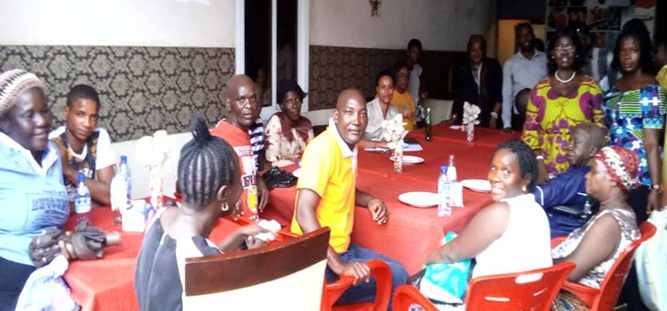
Stroke in Sierra Leone (SISLE) research group aims to understand and improve stroke care

Stroke in Sierra Leone (SISLE) is a research collaboration funded by the National Institute of Health Research (NIHR), the UK’s largest funder of health and care research, between King's College London and the College of Medicine and Allied Health Sciences (Freetown). This group is carrying out mixed methods research to try and understand stroke in Sierra Leone.

Here in this introductory blog, the team gives us an overview of the project, and the impact of stroke in this country.


Pa Alusine

The Kamara family were enjoying a boisterous Sunday lunch in the family home after church.  As usual Pa Alusine, the head of the family presided over the lunch, his sense of humour and playful nature had the grandchildren squealing with laughter.

He excused himself briefly to go to the bathroom, when his daughter looked back and saw him gripping the door frame and making a funny face, she thought it was another joke for the grandchildren.

It took a few moments to realise something wasn't quite right.

Pa Alusine was gripping the doorframe because he had lost the strength in his right leg. He was unable to speak, he couldn’t ask for help.

The family reacted quickly and laid him on the bed. They called a nurse who lived in the community nearby, she arrived at the bedside soon after. On her advice the family placed him in a car and drove directly to Connaught Hospital.

Pa Alusine had had a stroke, something that is not well understood in Sierra Leone.

Stroke in Sub Saharan Africa

The disease burden of stroke is increasing in this region because of increases in poor diets, smoking, alcohol consumption and lack of exercise.

As a result of these changes more people in cities like Freetown are at risk of non-communicable diseases such as stroke.

However, many things about stroke in this region are not understood, such as; which ethnic groups are most at risk? How long does it take patients to come to the hospital after a stroke? What is the cost of care? How do survivors’ lives change as a result of stroke?

The Connaught Hospital Stroke Register

The SISLE project is using a stroke register model to collect data about strokes.

A stroke register is an observational database that is focussed on gathering clinical information and data on the outcomes of patients. These observations can then be used to both understand and improve stroke care.

The stroke register that we have launched at Connaught Hospital, the main government referral Hospital in Freetown, is Sierra Leone’s first. It is collecting data, at admission, 90 days, 12 months, and 2 years post stroke.

The information being collected is on sociodemographic factors, stroke risk factors, stroke severity, treatment, and outcomes. We have now been collecting for 199 consecutive days and have 221 participants on the register

We are beginning to understand stroke in Sierra Leone much better, however there are some aspects of stroke in this country, that a stroke register will not help us to research.

These are the aspects of stroke that are linked to societal and cultural perspectives, and inherent beliefs. To be able to understand this we have reached out into the community. The Stroke survivors’ group is educating physicians and researchers on the experiences in Sierra Leone.

Life after Stroke in Sierra Leone

We are beginning to understand through our work with the stroke survivors’ group, the challenges of living with stroke disability in Sierra Leone

Lack of public awareness about stroke has led to there being societal stigma and discrimination directed towards stroke survivors, this makes their post stroke life more difficult.

One of the survivors highlighted how taxi drivers wouldn’t allow people with disability into their vehicle

Some survivors even highlighted how because they now had some form of disability, they felt like their communities were shutting them out, they felt ostracised.

World Stroke Day

With this in mind, the stroke survivors suggested that we carry out a walk for World Stroke Day to raise awareness of disability and hopefully reduce social stigma.

On the 29th October, the stroke survivors, members of the SISLE team, and the general public will be carrying out an awareness walk on city beach, Freetown. This will form the Sierra Leone leg of the World Stroke Organization World Stroke Day Relay.

Wednesday, October 23, 2019

Preventing heart disease and stroke, saving lives and promoting recovery and wellbeing in the west of Ireland

Patricia Hall, Cardiovascular Nurse Specialist at Croí, the Heart and Stroke Charity based in the west of Ireland, tells us about the history of the organisation that has recently become a member of the World Stroke Organization.

Patricia Hall (centre) with members of Croí's Stroke Support Group
Croí, established in Galway, Ireland in 1985 initially focused on the development of local and regional cardiac services and facilities, our mission has now shifted to cardiovascular disease prevention and rehabilitation, which encompasses stroke. Our goal is to prevent heart disease and stroke, save lives and promote recovery and wellbeing.

Each year approximately 10,000 people have a stroke-related event in Ireland, with an estimated 30,000 people living with disabilities as a result of a stroke. Our goals include raising awareness of the risk factors, signs of stroke and promote healthy lifestyles.

Stroke support services

Our experience in cardiovascular disease prevention has informed our development of stroke specific educational programmes and we support stroke survivors and family carers on their journey to live the best possible life after stroke. The Croí Heart and Stroke Centre provides a meeting place for people who have been affected by stroke – patients, family members, carers and friends, which enables them to come together and participate in various activities. While everyone’s experience of having a stroke is different, meeting other stroke survivors or caregivers who understand what they are going through can help with recovery. Making this connection can be vital – to learn more about stroke recovery options and to share the experiences of recovery from stroke.

Croí offers a range of stroke support services, which include:

·         Stroke support groups which meet in Galway and in Mayo.
o    Our stroke support groups meet once a month, coming together to participate in various activities including a chance to have fun, learn skills and meet new people. Whether it’s a listening ear or practical guidance and information, we support members in rebuilding their lives after stroke – regardless of where they are in the stroke journey.
o    Our stroke family carers’ group also meets separately throughout the year. Coming together to share experiences, reduce isolation and provide support to others in similar situations.

·         Specialised physical activity programmes and Yoga, designed specifically for those who have had a stroke.
·         Communication group run by a speech and language therapist for those with speech and communication difficulties following stroke.
·         Health and lifestyle educational programmes that focus on risk reduction.
·         Fun activities, like our summer day out, World Stroke Day event and Christmas party every year.

The aims of Croí’s stroke support group are:
·         To create a positive environment to meet others and share experiences.
·         To provide advice, education and support on stroke and good health.
·         To encourage participation in enjoyable activities beneficial to your wellbeing.
·         To provide information on how to access services local to you.
·         Peer support and friendship.

Additional activities this year included:
·         Roll out of the MyStroke Programme. This is a 4 week educational programme focused on risk reduction for stroke survivors and family/carers.
o    Topics included:- what is a stroke and how to prevent recurrence; dealing with emotions, self-esteem and intimacy after stroke; stroke specific exercise; healthy eating after stroke.

World Stroke Day
In recognition of World Stroke Day, Croí is hosting a Public Talk and Short Film screening to help raise awareness of stroke and offer information to stroke survivors.

This FREE event will start at 7pm on October 29th in the Croí Centre in Newcastle, Galway, and will include a talk by Dr. Tom Walsh, Stroke Specialist, Galway University Hospital and a local Galway stroke survivor, followed by a special screening of the award-winning documentary, A Tiny Spark.

As an independent not-for-profit organisation, our work is entirely funded from our own fundraising and revenue generating activities. For more information, please visit www.croi.ie and follow Croí on Facebook, Twitter and Instagram at @croiheartstroke.

Croí Centre Galway Ireland

Friday, June 21, 2019

When it comes to Stroke - Don’t Be the One

World Stroke Day 2019 will focus on stroke risk and prevention

Sample poster with WSO member co-branding
The World Stroke Organization has announced the theme for World Stroke Day 2019. With a focus on stroke prevention, the ‘Don’t be the One’ campaign aims to mobilise members, partners and the wider stroke community to raise public awareness of our individual life time risk of stroke and to equip as many people as possible with potentially life-saving prevention information and tools.

The rationale for the campaign message is the recent WSO analysis of the Global Burden of Disease, which shows that globally the lifetime risk of stroke has risen and now stands at 1 in 4. Combined with the Interstroke findings that showed around 90% of strokes are linked to a small number of easily addressed risk factors, the potential impact of public understanding of stroke risk and prevention awareness is clear.

Speaking about the World Stroke Day campaign, World Stroke Organization Vice President and Campaign Committee co-Chair, Sheila Martins said ‘For me the 29th October is always such an exciting day for the stroke community – it’s the one day of the year that we can come together globally and to make as many people as possible aware of stroke. This year our message When it comes to stroke, think prevention – Don’t be the one.’is relevant and essential to everyone and we look forward to seeing the stroke community taking up the campaign in countries around the world!’

Co-Chair Deidre De Silva and a leading awareness campaigner Singapore ‘Our team strived to deliver a campaign that will resonate with diverse populations around the world. Stroke is not prevented by hoping it will never happen to you. This campaign encourages everyone to be proactive by understanding their stroke risk and taking the steps to prevent stroke and its devastating consequences.'

World Stroke Day Campaign Resources
A campaign guide for members and the public will provide guidance on how to join the global prevention awareness effort. This will be available from the revamped World Stroke Day website. Members and partners will have access to campaign resources including the campaign video, gifs, editable posters, infographics, social media posts and translated prevention factsheets. 

Stroke Riskometer 
The Campaign team is also working in close partnership with the Stroke Riskometer team at Auckland University of Technology to promote the WSO endorsed Stroke Riskometer as a tool to understand individual stroke risk and to identify individual risk factors. Riskometer users will be encouraged to conduct their own risk assessment and to share the app on social media tagging four friends. If one person who is tagged downloads and uses the app, they will have free access to an app upgrade that will support them to take appropriate action to reduce their stroke risk. 

To find out more about how you can support the campaign please email campaign@world-stroke.org


Saturday, November 17, 2018

Thank You For Supporting World Stroke Day 2018


This year World Stroke Day on the October 29th, was firmly focused on life after stroke. On social media, in the press and and at 194 events spanning 61 countries, stroke survivors caregivers and professionals got together to raise visibility of stroke, share their experiences of getting #UpAgainAfterStroke and build on the ground political commitment to action on stroke prevention, treatment and support.

Our World Stroke Day campaign aimed to show that a meaningful life after stroke is possible and that with the right care and support people can and do get up again. 


We think our members, supporters and partners left no-one in any doubt that the 80 million stroke survivors around the world have the potential to move mountains.

World Stroke Day by Numbers

  • 170 million online campaign reach
  • 84 million potential media views
  • 194 registered events
  • 61 countries
  • 112,000 campaign web visits
  • 11,500 toolkit downloads
  • 157K reach on Facebook


The campaign isn't over, you can continue to share our resources and take action through the year. We'll also be running a series of webinars highlighting key issues in life after stroke - watch this space!


Sunday, October 28, 2018

Stroke Leaders Highlight Global Cost of Government Inaction


Today on World Stroke Day, October 29, the World Stroke Organization, is calling for urgent action and investment to address the growing burden of stroke and circulatory diseases globally. 

Highlighting the disappointing outcome of the recent UN High Level Meeting on Non-Communicable Diseases (NCDs) the WSO President, Prof Michaeal Brainin said, ‘The impact of stroke on individuals, families and society as a whole is devastating. Stroke survivors can face significant impairment of movement, speech, cognition alongside debilitating psychological, social and financial problems.'

'This devastation is compounded by knowing that 80% of strokes could be prevented by addressing a small number of risk factors, including hypertension, diet, smoking and exercise. Preventive action on stroke would also contribute to a massive scale reduction in CVD, cancer, diabetes and other significant causes of death and suffering worldwide.

'With this knowledge, the current lack of political will and investment is incomprehensible, especially given the costs of such inaction. While 5.5 million people die as a result of stroke each year, 80 million survivors around the world currently live with some form of disability or impairment. The costs to individuals is incalculable and the cost to society is astronomical.’


A recent policy document ‘Driving Sustainable Action for Circulatory Health’ published by the WSO and its partners in the Global Coalition for Circulatory Health, has calculated the global cost of circulatory diseases, including stroke, at US$957 Billion in 2015. On current projections this figure is set to rise to US$1044 Billion in the next 12 years.

The white paper sets out four key areas for action that, if enacted, would ensure delivery of global goals on disease reduction which are driving the rise in direct and indirect costs of NCDs. These include legislative interventions to:


1. Deliver policies and programmes to address tobacco, alcohol and unhealthy foods, promote clean air and deliver a built environment which fosters safe physical activity.

2. Ensure access to affordable, quality-assured essential medicines, delivered by adequately trained staff, including access to multi-therapy treatments.

3. Mobilise sufficient resources to combat non-communicable diseases including stroke. The taxation of unhealthy products such as alcohol, tobacco, unhealthy foods and non-alcoholic beverages (such as sugar-sweetened beverages) would generate revenues that could be directed to further prevention and control of circulatory diseases at global and national levels.

4. Put in place reliable, simple, and fit-for- purpose surveillance systems for monitoring the burden of stroke and the prevalence of NCD risk factors and treatment of stroke at national and global levels.


Prof Brainin concluded 'At the recent UN High Level Meeting on NCDs in New York, governments delivered a weak response to a global crisis and agreed to wait 7 years before reviewing progress. In that time another 38.5 million people will die of stroke. We can't wait until 2025 to calculate our losses, we need strong leadership and bold action to save lives now.'

Friday, September 21, 2018

Up Again After Stroke


This year the focus of World Stroke Day is on life after stroke. Around 80 million people living in the world today have experienced a stroke and over 50m survivors live with some form of permanent disability as a result. 

While for many, life after stroke won’t be quite the same, our campaign aims to show that, with the right care and support, a meaningful life is still possible. As millions of stroke survivors show us every day, it is possible to get #UpAgainAfterStroke.

While the impact of stroke is different for everyone on 29th October 2018, we want to focus the world’s attention on what unites stroke survivors and caregivers; their resilience and capacity to build on the things that stroke can’t take away and their determination to keep going on the recovery journey.


Join with us

Our website has resources and key messages to help you raise awareness of life after stroke issues on World Stroke Day. Here's how you can join with us and show support and solidarity with stroke survivors on World Stroke Day:
  • Download campaign social media resources from the campaign website www.worldstrokecampaign.org; If you have some design skills and software and want to adapt materials for local use contact campaign@world-stroke.org
  • Change the heading pictures on your account and share social posts with your networks.
  • Share your personal experience as a stroke survivor or caregiver on Facebook and twitter. Be sure to include the campaign hashtag #UpAgainAfterStroke so that your experience is seen and shared.
  • If you don’t use social media, share your story of stroke recovery on the World Stroke Campaign website. 


Thursday, April 12, 2018

What Support Means for Stroke Survivors: Rehabilitation, Hope and Connection

There are an estimated 17 million strokes worldwide each year, putting the disease on the leader board as the single largest cause of disability and the second leading cause of death worldwide.

While stroke incidence in high income countries has been on the decline in recent years - largely due to improvements in preventive and acute treatments - a consequence of an ageing population is that these countries are seeing a growing proportion of people living longer with the physical, communication, emotional, social and financial consequences of stroke.

The challenge is heightened in low and middle-income countries where stroke incidence has reached epidemic proportions and where trends show increased prevalence of stroke risk factors and stroke incidence in a much younger population. Significant barriers to timely and optimal stroke care, which impact negatively on recovery, are compounded by difficulties in accessing post-stroke rehabilitation and long-term support for complex care needs.

The most recent Global Burden of Disease report shows that stroke was responsible for over 116 million years of life lived with disability (YLLDs) worldwide in 2016 alone. While this figure hints at the huge impact of stroke on global development, it doesn't come close to communicating the profound and everyday impact of disability, financial stress, stigma and mental health issues shared by stroke survivors and their families elsewhere on this blog.

Addressing stroke support issues on World Stroke Day 2018

All of this provides good reason to focus our World Stroke Campaign on support for people who have had stroke. 'Support' however means a lot of different things to different people and to help us refine the campaign we asked stroke survivors and caregivers to help us define the focus and the creative approach to this year's World Stroke Day campaign

Workshops with SSO representatives at the Stroke Alliance for Europe (SAFE) conference in Zagreb were complemented by an online questionnaire open to the global SSO network. These gave a picture of what support means to stroke survivors, their families and caregivers and provided input into determining what the Campaign priorities should be in terms of focus and key message. Unsurprisingly perhaps - given the extensive consultation that informed the document - many of the themes from consultation map onto the recovery section of the World Stroke Organization's Global Stroke Bill of Rights.
  • Be provided with hope for the best possible recoveryI can make, now and into the future. 
  • Receive psychological and emotional support in a form that best meets my needs. 
  • Be included in all aspects of society regardless of any disability I may have. 
  • Receive support (financial or otherwise)to ensure I am cared for in the longer term. 
  • Be supported to return to work and/or other activities I may choose to participate in after my stroke. 
  • Get access to formal and informal advocacy to assist me with access to the services I need. 
  • Be connected to other stroke survivors and caregivers so I may gain and provide support in my recovery from stroke
The stroke support issues and the level of priority attached to them (Rehabilitation, Hope and Connection were the top three priorities) have been incorporated into the World Stroke Campaign brief and will inform the messaging and content framework for the campaign in 2018. The brief is currently being reviewed by creative agencies who will develop the campaign concept ready to launch in May 2018.

When asked what single message the campaign should communicate the majority of respondents said that the most important thing to communicate is hope for life after stroke. Questionnaire respondents also highlighted the specific needs and issues faced by young stroke survivors and families. We will be working with our members in the young stroke space to gather experiences and provide opportunities to increase awareness of some of the specific challenges (and triumphs!) experienced by young stroke survivors and their families.

Many thanks to all who participated in the consultations and took time to complete the questionnaire. This really is the campaign year for SSOs! And we can assure you that your views have been heard and acted on. We will be keeping you up to date on developments in coming months and look forward to working with our SSO members to highlight the issues that matter most to you.

Tuesday, February 27, 2018


Shaping the World Stroke Campaign 2018

The World Stroke Campaign theme for 2018 is ‘support’.  With such a broad topic we have been working to agree what ‘support’ means to SSO members and to refine the focus of the campaign in 2018. Consultation workshops with SSO representatives across Europe were delivered as part of the programme of the SAFE Annual Conference in Zagreb in December 2017. In these workshops participants were asked to consider three key questions relating to the existing themes identified in the World Stroke Campaign Strategy:

1          Access to support for life after stroke 
2          Support for self-management*
3          Addressing barriers to social integration

Workshop groups were divided into three discussion groups and allocated a topic to discuss and capture key issues and potential solutions for one of the themes.  All participants were then given a number of stars and invited to place these against issues and solutions that had been identified in discussion.

* Participants in workshops disliked the term self-management and preferred the term ‘recovery’, which was more positive, less service oriented and didn’t run the risk of being considered ‘care on the cheap’.

It was acknowledged that recovery didn’t mean a return to pre-stroke condition but achieving the best possible post-stroke outcome characterised by a good quality of life and positive well-being.

Clear cross-cutting issues emerged from the analysis of workshop contributions and discussions made clear that while potential topics could be identified these addressing one could be highly interdependent with addressing another. E.g. effective rehabilitation requires individual motivation, which can be linked to self-worth, which can be linked to access to meaningful activity and social networks. Similarly addressing disability discrimination and stigma is critical to returning to the work.

Rehabilitation and recovery
Rehabilitation for all stroke patients should be guaranteed both shortly after and for the long term with effective transition planning and options for acute to long-term recovery. Even in high resource countries with highly developed healthcare systems rehabilitation is not given a priority and is not accessible to stroke survivors.

Rehabilitation and recovery is a lifelong process and maintaining commitment is tough. Motivation is closely linked to effective rehabilitation in the short and long term. Maintaining a recovery focus in chronic phase is helped if services are accessible, signposted and if survivors, caregivers and professionals have hope.
Financial barriers to rehab access need to be addressed and rehabilitation should be available in centres and at home.
Social rehabilitation isn’t given enough attention, but is important to achieving positive well-being which is critical to physical rehabilitation.

Awareness of and engagement in effective self-managed rehab activities is important, but self managed/family supervised rehabilitation can’t be seen as a replacement for core services or ‘care on the cheap’. 

Accessibility of potential rehab activities for stroke survivors with physical disabilities and communication difficulties/aphasia.
Psychosocial support
Accessibility of information about support for stroke survivors and caregivers is essential and some may need help to access due to vision and communication difficulties. Can’t assume that everyone has computer skills or a computer – people may need help to find the information they need.

Stroke survivors often struggle to adjust to their ‘new normal’. Adjusting to loss and addressing depression and low self-confidence is important.

Access to psychological therapies and meaningful activity is helpful.

Getting back to work or being useful has a positive impact on self-esteem and well-being.

Successful social integration is dependent on the removal of barriers.
Financial issues
Financial barriers to recovery were identified as key issue for stroke survivors and families. Even when healthcare is provided by government or social insurance, care is often only in the acute and post-acute phase and patients ‘fall off a cliff’ 6 wks after discharge with costs having to be met out of pocket.

Longer-term health, rehab and home adjustment costs are not always available and it is often unclear who should pay – the individual or the government.

Governments need to ensure access to post-stroke care in chronic stage.

Social security systems and information about benefits rights need to be available for stroke survivors and families.


Discrimination and stigma
Stroke stigma and disability discrimination was consistently identified as a priority issue for stroke survivors as it created very real barriers to service access and social integration post-stroke.

Physical access is just one part of accessibility, stroke survivors need people to understand and find ways to address communication and visual difficulties that they experience.
Addressing workplace discrimination was critical to addressing financial and psychosocial issues faced by stroke survivors.
Legislation is needed to address discrimination and barriers to access to services, social and cultural opportunities and work.

Survivors and families should be informed of their rights and supported to access them.

Access to SSOs is essential for providing stroke survivors and care-givers with opportunities to meet and share experiences. Peer to peer communication mitigates some of the impact of stigma and discrimination

Family and friends
Spouses and family members also experience loss and adjustment difficulties after a loved one has a stroke, it is important to recognize their need for psychological and practical support.

The impact of stroke and the caring role is often overlooked and needs more attention by primary care providers. Carer’s assessments should be made available.

Carer’s health and well-being should be an important consideration for their primary healthcare providers.

Caregivers groups are an important source of support in adjusting to a caring role and accessing support and rights.


What do you think?
An online questionnaire has been developed to gather views from SSOs who weren’t represented at the Zagreb. Please share the questionnaire along with the table above to provide some context for the categories and help us to make the World Stroke Day campaign as relevant as it can be to our global audience.

After the survey closes on March 16th, analysis of the questionnaire will be undertaken by the Campaign Working Group and will inform the creative brief that is developed for the campaign in 2017.

For more information about the campaign contact campaigns@world-stroke.org


Featured Post

Epidemiologic profiling for stroke in Nepal: Endeavour towards establishing database

Resha Shrestha  @avi_neuro. , MS 1 , Avinash Chandra, MD 1 , Samir Acharya, MS 1 , Pranaya Shrestha, MS 1 , Pravesh Rajbhandari, MS 1 , Re...